Our skin experts answer the most frequently asked questions about Microneedling, including benefits, results timeline, safety, recovery, side effects, and treatment costs for face and body skin rejuvenation.
What is microneedling?
Microneedling (also known as collagen induction therapy) is a minimally invasive treatment designed to stimulate the skin’s natural production of collagen and elastin.
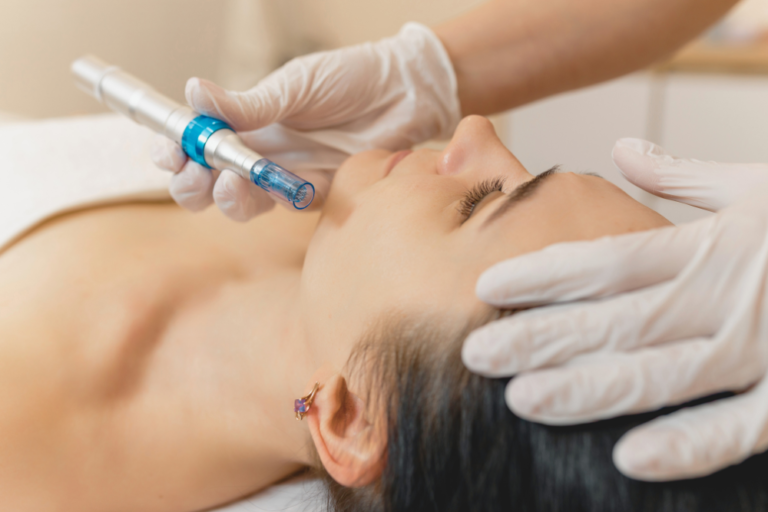
A device fitted with fine, sterile needles creates controlled micro-injuries in the skin. These microchannels trigger the body’s natural wound-healing response, leading to gradual improvements in skin texture, firmness, and overall appearance. The result is skin rejuvenation from the inside out.
What are the benefits of microneedling for the skin?
Microneedling is a versatile treatment that can improve a wide range of skin concerns on both the face and body, including:
- Fine lines and wrinkles
- Acne scars and other textural scarring
- Uneven skin tone and pigmentation
- Enlarged pores
- Stretch marks
- Mild skin laxity
Results develop gradually as collagen remodels over time.

Can microneedling help with skin ageing?
Yes. As collagen production naturally declines with age, fine lines, wrinkles, and uneven texture become more noticeable.
Microneedling helps stimulate new collagen and elastin, which can soften fine lines, improve firmness, and create smoother, more resilient skin over time.
Is microneedling effective for acne scars?
Microneedling is particularly effective for depressed acne scars, such as rolling or boxcar scars.
By encouraging collagen production beneath the scar, microneedling helps fill and smooth uneven areas of the skin. Raised or hypertrophic scars may require alternative treatments and should be assessed individually.
Can microneedling improve uneven skin tone and pigmentation?
Yes. Microneedling can help improve uneven tone, sun damage, and certain types of pigmentation by stimulating the formation of new, healthier skin cells.
Research also suggests benefits for inflammatory skin conditions. For example, studies on fractional microneedling radiofrequency have shown improvements in redness and discolouration associated with rosacea when performed appropriately.
Does microneedling work for stretch marks?
Microneedling can help reduce the appearance of stretch marks by increasing collagen and elastin in affected areas such as the abdomen, thighs, arms, and hips.
While stretch marks are permanent changes to the skin, microneedling can significantly improve their texture, firmness, and visibility over time.
Who is a good candidate for microneedling?
Microneedling is suitable for many skin types and concerns, particularly those looking to improve:
- Fine lines and early signs of ageing
- Acne scars and uneven texture
- Enlarged pores
- Mild pigmentation
- Dull or rough skin
- Stretch marks (for body treatments)
It is often a good option for individuals who want collagen stimulation and skin rejuvenation without aggressive resurfacing or significant downtime.
Microneedling can also be suitable for darker skin tones, as it does not rely on heat or light energy like some laser treatments — reducing the risk of pigment complications when performed correctly.
Because every skin journey is unique, a personalised consultation helps determine whether microneedling is the right fit for you.
Who should avoid microneedling?
Microneedling may not be appropriate for individuals with:
- Active acne breakouts
- Active skin infections
- Severe eczema or psoriasis flare-ups
- Certain medical conditions affecting healing
- Recent isotretinoin use
What happens during a microneedling treatment?
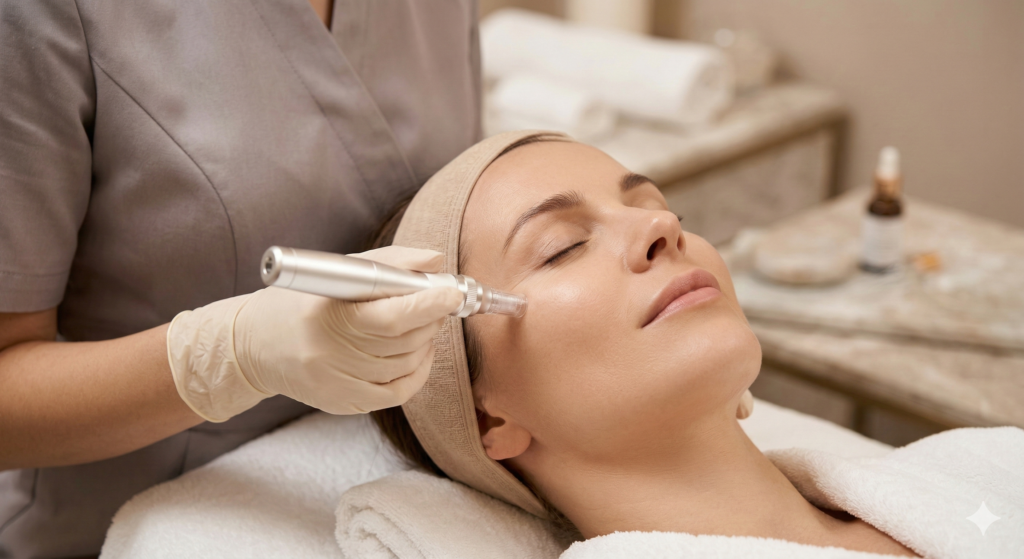
A face or body microneedling treatment typically follows these steps:
- Consultation and skin assessment
The treatment begins with a consultation to assess your skin concerns, goals, and suitability for microneedling. This is also a chance to ask questions about the device being used, recommended number of sessions, expected results, and overall comfort. - Skin preparation
The treatment area is thoroughly cleansed. A topical numbing cream may be applied to help ensure a comfortable experience throughout the procedure. - Microneedling of the skin
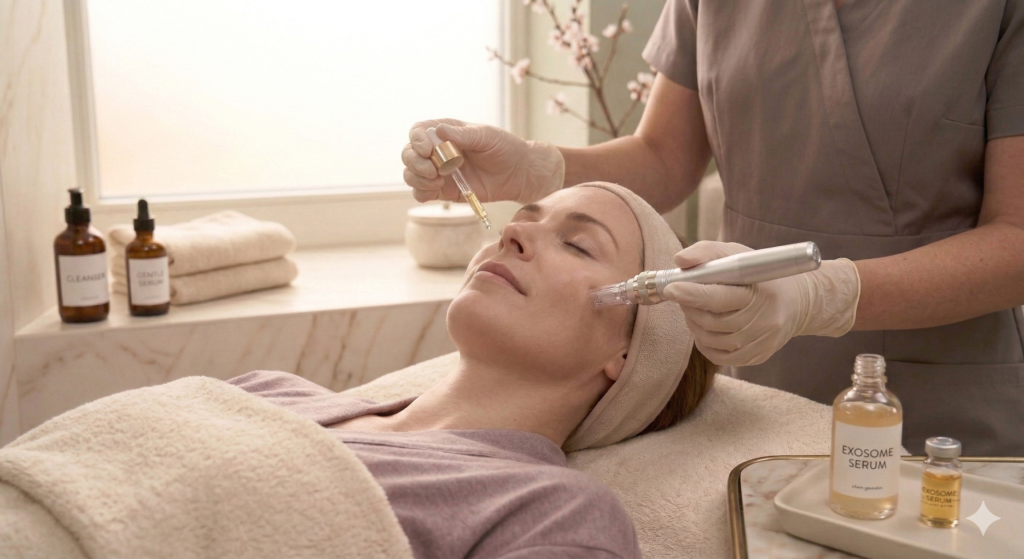
A medical-grade microneedling device is passed over the skin in controlled vertical, horizontal, and diagonal movements. This creates precise microchannels that stimulate collagen production and skin renewal. - Post-treatment soothing and protection
Once microneedling is complete, the skin is gently cleansed. Calming products are applied to support healing, and sun protection is typically used on treated areas to protect the skin as it recovers.
The procedure is carefully adjusted to your skin’s needs — including needle depth and intensity — to balance results with safety.
How long does a microneedling session take?
The entire treatment takes up to an hour.
The Microneedling portion is normally 10–15 minutes, while the remaining time is taken up with consultation, skin prep, a hydrating mask, and aftercare products.
Ultimately, the actual time will depend on:
- The size of the treatment area
- The skin concern being addressed
- Needle depth and treatment intensity
How many microneedling sessions are needed?
For optimal results, 3–6 sessions are commonly recommended.
The exact number depends on factors such as:
- The severity of the skin concern
- Skin response and healing speed
- Treatment depth
Your aesthtician will recommend a treatment plan tailored to your skin and goals. Starting with a personalised consultation helps map out the safest and most effective schedule for you.
How often should microneedling be done?
Depending on what you are treating, microneedling sessions are usually spaced every 2–8 weeks, allowing the skin adequate time to heal and regenerate.
Once results are achieved, maintenance treatments may be recommended every 6–12 months, depending on individual goals.
Does microneedling hurt?
Microneedling is generally well tolerated. Sensations are often described as pressure, vibration, or light scratching rather than pain. Any discomfort is temporary and subsides quickly after treatment.
While you have an option to apply a topical numbing cream to minimise discomfort, results are better without it due to the response from the skin.
What are the common side effects of microneedling?
Temporary side effects are normal and typically mild. These may include:
Immediately after (0–24 hours):
- Redness similar to a sunburn
- Warmth or tightness
- Minor pinpoint bleeding
Days 1–3:
- Redness gradually fades
- Mild swelling
- Dryness or light flaking
Days 3–7:
- Skin appears calmer and smoother
- Early improvements in texture and glow
Weeks 1–4:
- Continued improvements as collagen remodels
What are the aftercare instructions following microneedling?
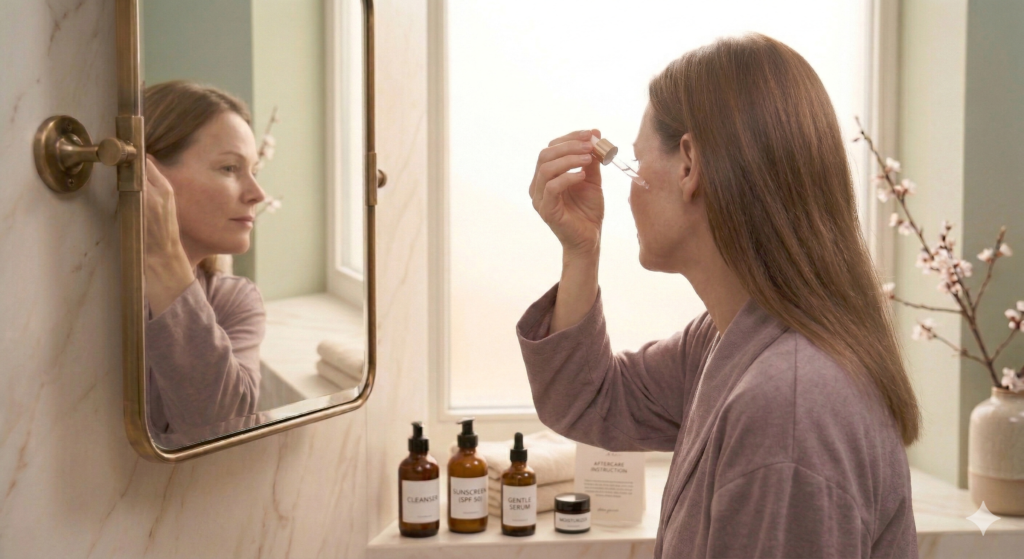
Aftercare typically includes:
- Gentle skincare only
- Daily sunscreen use
- Avoiding strenuous exercise, heat, and exfoliants for several days
- Following any personalised product recommendations
Most people can resume normal activities shortly after treatment.
Is microneedling safe?
When performed by trained professionals using medical-grade devices, microneedling is considered a safe and well-established treatment.
As with any cosmetic procedure, safety depends on proper technique, hygiene, device quality, and adherence to aftercare instructions.
Is microneedling safe for all skin tones?
Microneedling is generally safe for all skin tones when non-ablative devices are used.
Because the epidermis is not removed, microneedling carries a lower risk of post-inflammatory hyperpigmentation compared to certain laser or chemical treatments—making it suitable for darker skin tones when performed correctly.
What are the potential risks of microneedling?
While uncommon, potential risks include:
- Infection
- Prolonged redness or inflammation
- Breakouts
- Pigment changes
- Sensitivity to topical products
These risks are significantly reduced when treatments are performed by qualified professionals and aftercare guidelines are followed.
What is microneedling with exosomes?
Microneedling with exosomes is an advanced variation of traditional microneedling.
Exosomes are extracellular vesicles derived from stem cells that play a role in cell communication and tissue repair. When applied during microneedling, they can enhance the skin’s regenerative response.
How is microneedling with exosomes different from standard microneedling?
When combined with microneedling, exosome serums may help:
- Accelerate healing and recovery
- Reduce inflammation
- Enhance collagen and elastin production
- Improve skin tone, texture, and radiance
- Support scalp and hair rejuvenation
Standard microneedling remains effective on its own; the choice between treatments depends on individual goals, skin condition, and professional recommendation.
If you’d like a more comprehensive breakdown of how this treatment works — including detailed benefits, candidacy considerations, and treatment planning — you can read our complete guide to Face & Body Microneedling.
Further Questions About Microneedling
Is microneedling worth it?
Microneedling can be highly effective for improving skin texture, scars, and overall skin quality when performed as a series. Results vary depending on skin concerns, treatment depth, and individual skin response.
Learn more in our in-depth microneedling guide.
How long do microneedling results last?
Results from microneedling can last several months, with continued improvement as collagen remodels. Maintenance treatments are often recommended to help sustain results long term.
Read our full guide on microneedling results and maintenance.
Microneedling vs laser treatments: which is better?
Both microneedling and laser treatments can improve skin texture and tone, but they work in different ways and suit different skin types and concerns. The best option depends on your goals, downtime tolerance, and skin characteristics.
Explore our detailed comparison of microneedling vs laser treatments.
Can microneedling be combined with other treatments?
Yes. Microneedling is often combined with other treatments to enhance results, depending on skin goals and professional guidance. Combination approaches may help address multiple concerns more effectively.
Learn more about combination skin treatments.
How much does microneedling cost?
The cost of microneedling varies depending on:
- The size of the treatment area (face vs body)
- The depth of treatment required
- Whether specialised serums are included
- The number of sessions recommended
- The technology used
In general, single-session pricing typically ranges between:
- $200–$350 for full face treatments
- $300–$500 for face and neck
- $350–$700+ for larger body areas (such as abdomen, thighs, or back scars)
Most people require a series of treatments (typically 3–6 sessions), and package pricing is often available.
While microneedling requires an upfront investment, many clients find it more cost-effective long term compared to ongoing resurfacing treatments, as results continue improving through collagen stimulation over time.
A consultation is recommended to determine the most suitable plan and accurate pricing.