Our trained hair removal specialists answer the most frequently asked questions about Waxing — including how it works, who it suits, safety, results, and cost.
What is waxing?
Waxing is a professional hair removal method that removes hair directly from the root using warm or hot wax.
The wax is applied to the skin and then removed quickly, pulling hair out from the follicle rather than cutting it at the surface (like shaving). Because the hair is removed from the root, regrowth takes longer and often becomes finer over time.
Waxing can be performed on most areas of the face and body, including:
- Brows
- Upper lip and chin
- Underarms
- Arms and legs
- Bikini and Brazilian areas
It is designed for smooth, longer-lasting hair removal rather than permanent reduction.
How does waxing work?
Waxing works by adhering to the hair shaft and gripping it at the root.
When the wax is removed:
- The entire hair is pulled out from the follicle
- The growth cycle is temporarily interrupted
- New hair must regrow from the base of the follicle
Because hair grows in cycles, consistent waxing over time may lead to:
- Softer regrowth
- Slower hair return
- Reduced density in some individuals
Professional technique matters. Proper wax temperature, correct application, and controlled removal reduce the risk of skin lifting, irritation, and ingrown hairs.
What are the benefits of waxing?
Waxing offers several advantages compared to shaving or hair removal creams:
- Longer-lasting smoothness (typically 3–6 weeks)
- Removal of hair from the root
- Reduced risk of razor burn
- Fewer sharp stubble regrowth
- Smoother skin texture
- Potential for finer regrowth over time
It is commonly chosen for both convenience and improved skin feel.
Does waxing cause hair to grow back thicker?
No.
This is a common myth. Waxing removes hair from the root and does not change the structure of the follicle.
In fact, with consistent waxing, many people notice that hair grows back:
- Finer
- Softer
- Less dense
Hair may feel different when it first grows back because it regrows with a natural tapered tip — not a blunt edge like shaved hair.
Can waxing help reduce ingrown hairs?
Waxing may reduce ingrown hairs compared to shaving because it removes the entire hair from the root rather than cutting it at the surface.
However, ingrown hairs can still occur, especially if:
- Hair is very coarse or curly
- Dead skin builds up around follicles
- Tight clothing causes friction
Proper exfoliation and aftercare significantly reduce the risk.
Is waxing better than shaving?
Waxing and shaving both remove unwanted hair, but they differ significantly in results and maintenance.
Shaving:
- Cuts hair at the surface
- Requires frequent upkeep
- Often causes stubble and razor irritation
Waxing:
- Removes hair from the root
- Lasts longer between sessions
- Leaves smoother regrowth
Waxing is often preferred by those wanting longer-lasting smoothness.
Who is a good candidate for waxing?
Waxing is suitable for individuals who:
- Want longer-lasting hair removal
- Experience irritation from shaving
- Are prone to razor bumps
- Prefer smoother regrowth
- Want regular grooming maintenance
Because every skin journey is unique, a personalised consultation helps determine whether this treatment is the right fit for you.
Who should avoid waxing?
Waxing may not be suitable for individuals who:
- Are using isotretinoin (Accutane)
- Are using topical retinoids in the treatment area
- Have active sunburn
- Have open wounds or skin infections
- Have extremely sensitive or compromised skin
- Have recently undergone aggressive resurfacing treatments
Certain medications and medical conditions may increase sensitivity, so suitability should always be assessed beforehand.
What happens during a waxing session?
A professional waxing session typically includes:
Consultation and assessment
The treatment area is assessed for suitability and skin condition.
Preparation
The skin is cleansed and dried to ensure proper wax adhesion.
Wax application and removal
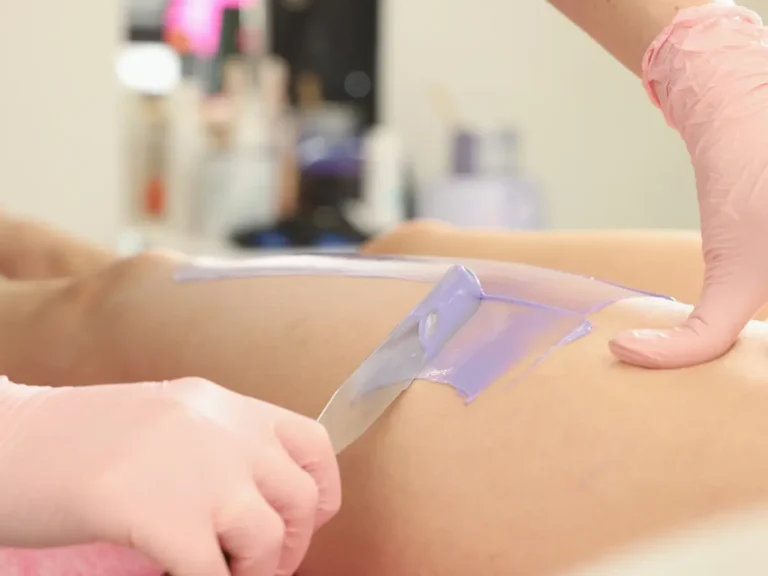
Warm wax is applied in the direction of hair growth and removed quickly to pull hair from the root.
Soothing and protection
Calming products are applied to reduce redness and support the skin barrier.
The process is methodical and adjusted according to skin sensitivity and treatment area.
How long does a waxing session take?
Session length depends on the treatment area:
- Small areas (lip, brows, underarms): 10–20 minutes
- Medium areas (half legs, bikini): 20–40 minutes
- Larger areas (full legs): up to 60 minutes
There is typically no downtime.
Does waxing hurt?
Waxing can cause brief discomfort when the wax is removed.
Most people describe the sensation as:
- Quick and sharp
- Temporary
- More tolerable with regular sessions
Sensitivity varies by area, with bikini and underarm regions typically feeling more intense than legs or arms.
How many waxing sessions are needed?
Waxing is not a one-time treatment. Hair regrows according to your natural growth cycle, so maintenance is required.
Most people continue waxing every 3–6 weeks depending on:
- Hair growth rate
- Treatment area
- Personal preference
Your aesthetician will recommend a treatment plan tailored to your skin and goals. Start with a personalised consultation to help map out the safest and most effective schedule for you.
How often should you get waxing done?
Waxing is typically scheduled every 3–6 weeks.
Regular scheduling helps:
- Maintain smoother skin
- Align with hair growth cycles
- Improve regrowth consistency
When will you see results from waxing?
Results are immediate.
After treatment, the treated area will feel smooth because hair has been removed from the root.
Some mild redness may appear but usually settles within hours.
How long do waxing results last?
Results typically last:
- 3–6 weeks
This varies depending on:
- Hormonal factors
- Hair thickness
- Individual growth cycles
Maintenance treatments help sustain smoothness.
Is waxing safe?
Yes — when performed by trained professionals using proper technique and hygiene standards.
Safety depends on:
- Correct wax temperature
- Proper application and removal
- Suitable candidate selection
- Following aftercare instructions
Risks increase significantly with improper technique or unsuitable skin conditions.
What are the common side effects of waxing?
Temporary side effects may include:
- Redness
- Mild swelling
- Sensitivity
- Small bumps around hair follicles
These effects typically resolve within 24–48 hours.
What are the potential risks of waxing?
Rare risks may include:
- Skin lifting
- Bruising
- Infection
- Hyperpigmentation (in sensitive skin)
These are uncommon and usually linked to improper technique or waxing over compromised skin.
What are the aftercare instructions following waxing?
Proper aftercare helps minimise irritation and reduce ingrown hairs.
First 24–48 hours:
- Avoid heat (saunas, hot showers, exercise)
- Avoid sun exposure
- Avoid tight clothing (especially after bikini waxing)
- Avoid applying fragranced products
Ongoing care:
- Gently exfoliate after 48 hours
- Keep skin moisturised
- Apply sunscreen daily on exposed areas
Supporting the skin barrier helps maintain smooth results.
If you’d like a more comprehensive breakdown of how this treatment works — including detailed benefits, candidacy considerations, and treatment planning — you can read our complete guide to Waxing.
Further Questions About Waxing
Can you wax before or between laser hair removal sessions?
Waxing is not recommended between laser hair removal sessions because it removes the hair root, which the laser needs to target. Shaving is preferred between laser treatments.
Can waxing be combined with other treatments?
Yes, waxing can often be combined with other treatments, but timing matters.
It should not be performed immediately after:
- Chemical peels
- Microneedling
- Laser treatments
- Aggressive exfoliation
A coordinated treatment plan ensures safety.
Can you wax at home?
At-home waxing kits exist, but professional waxing ensures:
- Proper hygiene
- Controlled wax temperature
- Reduced risk of skin lifting
- More thorough hair removal
Incorrect technique increases the risk of irritation and injury.
How much does waxing cost?
The cost of waxing varies depending on:
- Treatment area
- Time required
- Whether it is part of a package
In general, single-session pricing typically ranges between:
- $20–$40 for small areas
- $40–$80 for medium areas
- $80–$120+ for larger areas
Maintenance sessions are typically scheduled every few weeks.
View Waxing options and pricing.
Where can I get Waxing in Christchurch?
Considering waxing hair removal in Christchurch? At Lovoir Beauty Salon & Day Spa, our trained specialists can assess your needs and tailor a plan to your goals. Book a consultation to get started.