Our aestheticians answer the most frequently asked questions about Electrolysis Hair Removal — including the benefits, safety, what to expect, how to prepare, other treatment uses, and more.
What is electrolysis hair removal?
Electrolysis is a hair removal treatment in which a trained practitioner uses a fine probe and a small electrical current to destroy individual hair follicles. Because a destroyed follicle can no longer produce hair, electrolysis is used for permanent hair reduction.
Electrolysis is also called electrolysis hair removal or needle epilation, and is performed by a qualified electrologist. From an aesthetic hair-removal perspective, its defining feature is that it treats one hair at a time. That precision suits brows, hairlines and small facial areas as well as larger areas of the body.
How does electrolysis work?
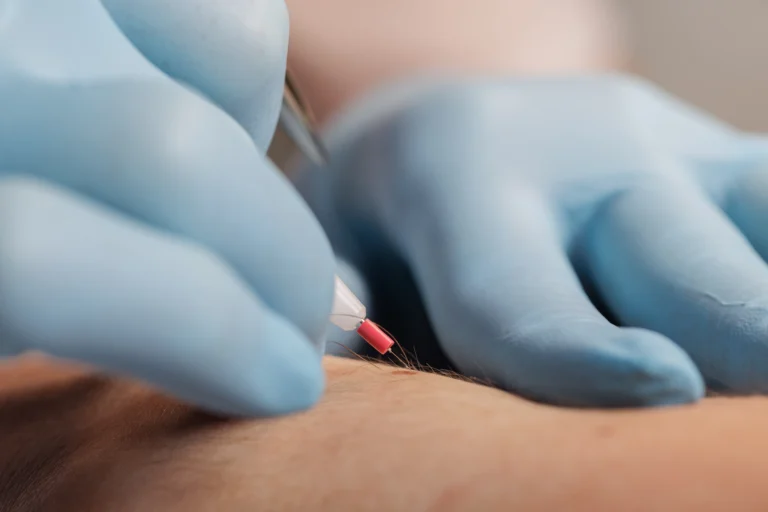
Electrolysis works by sending an electrical current through a very fine probe placed in the hair follicle, which damages the follicle so it stops producing hair.
During the electrolysis technique, an aesthetician inserts a small, fine needle into the follicle, followed by an electrical current. The current travels to the base of the follicle and destroys the hair root.
Because each hair is treated individually, electrolysis is slower than waxing or laser.
What are the types of electrolysis?
Electrolysis comes in three main types, defined by the kind of current used:
- Galvanic electrolysis passes a direct current down the probe, causing a chemical reaction that destroys the hair bulb.
- Thermolysis uses a high-frequency alternating current that heats and destroys the hair bulb.
- Blend electrolysis combines the galvanic and thermolysis methods in a single treatment.
DermNet NZ notes that no clinical trials have compared the three methods, so the choice depends on your hair, your skin and your practitioner’s training.
Will electrolysis permanently remove hair?
Yes, electrolysis can permanently remove treated hair, but only after a full course of sessions.
The American Academy of Dermatology (AAD) states that electrolysis can permanently remove unwanted hair, and that once the hair is gone, maintenance treatments are not needed.
Because hair grows in cycles, it takes several sessions to reach every follicle, and some treated hairs regrow and need treating again. Your practitioner will review your progress throughout the course.
What else can electrolysis treat?
Apart from hair removal, electrolysis can also help with spider vein reduction, skin tag removal and sebaceous hyperplasia. The same fine-probe technique is adapted to treat each concern:
- Unwanted hair on the face and body, including brows, hairlines and sideburns that need shaping.
- Spider veins, which are damaged blood vessels just under the skin that look red, blue or purple.
- Skin tags, which are harmless growths that can appear anywhere on the skin.
- Sebaceous hyperplasia, a harmless overgrowth of the skin’s oil glands that forms small, soft bumps on the face.
How many electrolysis sessions are needed?
Most people need several electrolysis sessions, typically booked once a week or every second week.
The total number of sessions depends on:
- The size of the area. Smaller areas like the face or underarms require at least 8+ sessions. Larger areas like the legs, arms, or bikini line need at least 10+ sessions, while the chest and back typically take at least 12+ sessions.
- How dense and coarse the hair is. Thick, dark hair and larger areas take longer than a few fine hairs.
A full course of appointments can take between 12 to 18 months.
Your practitioner will plan the course at your first appointment and space sessions further apart as fewer hairs regrow.
How long does an electrolysis session take?
An electrolysis session lasts between 15 minutes and one hour, depending on the area being treated.
At our clinic, permanent hair reduction is booked in 20-, 30- or 40-minute sessions to suit the area. Red vein treatment is booked in 30-minute sessions and skin tag removal in 20-minute sessions, although several skin tags can take 20 to 40 minutes.
Does electrolysis hurt?
Electrolysis causes mild discomfort rather than severe pain. How much you feel depends on your pain tolerance and the area being treated.
The sensation is often described as slight stinging or tingling each time a hair is treated.
For those with a low pain tolerance, a topical anaesthetic cream may be applied about an hour before treatment. Ask your practitioner whether it suits you.
Does electrolysis work on all hair and skin colours?
Yes. Electrolysis works on all hair colours and skin tones, because it destroys the follicle directly rather than relying on pigment in the hair. That makes it an option for blonde, grey, red and white hair.
However, some considerations to note:h
- People with thick, dark hair may need more sessions.
- People with darker skin tones have a higher chance of developing temporary dark spots after treatment, or form raised scars called keloids. So make sure to mention any history of pigmentation or keloids at your consultation.
Who should avoid electrolysis?
Electrolysis suits almost anyone who wants to remove unwanted hair, but some situations need extra care. Tell your practitioner before treatment if any of these apply:
- You have a pacemaker, as DermNet NZ advises against electrolysis because the current can interfere with the device.
- You get cold sores, because reactivation of herpes simplex is a recognised complication.
- You form keloids or scar easily, because scarring and pigment changes are possible risks.
- You have an infection or active skin condition in the area being treated.
- You have a medical condition or take regular medication, in which case your doctor’s advice comes first.
Can you have electrolysis while pregnant?
Treatments that use an electrical current, including electrolysis, are often adjusted or postponed during pregnancy.
To be safe, get approval from your doctor or midwife before booking electrolysis during pregnancy. Similarly, always tell your electrolysis practitioner that you are pregnant.
How should you prepare for electrolysis?
A little preparation helps each session go smoothly:
- Tell your practitioner about medications, a pacemaker, skin conditions, cold sores, keloids and pregnancy.
- Arrive with clean skin and no makeup on the area being treated.
- Leave the hair in place, avoiding plucking, threading or waxing before your appointment unless your practitioner advises otherwise, because electrolysis needs a hair in the follicle to treat.
- Ask about numbing cream if you are worried about discomfort, and apply it only as directed.
- Plan the next 24 hours without heavy exercise, sun exposure or makeup on the treated area.
What happens during an electrolysis appointment?
Electrolysis appointments start with a short consultation and then follow a set sequence:
- A consultation and skin check confirm the area, hair type and any reason not to treat.
- The skin is cleansed to prepare the area.
- A sterile probe is placed into each hair follicle, one at a time.
- A brief electrical current is delivered, and the treated hair is gently removed.
- A soothing product is applied to calm the skin before you leave.
You can ask your practitioner to pause at any time.
Is electrolysis safe?
Yes. Electrolysis is safe when performed by a trained, experienced practitioner using sterile probes.
The risks come mainly from poor technique or hygiene. Using unsterile probes can cause a skin or blood infection, and inexperienced technicians can cause scarring and burns. Changes in pigmentation and reactivation of cold sores are also possible complications.
Choosing a qualified electrologist who uses disposable equipment keeps these risks low.
What are the side effects of electrolysis?
Mild redness around the treated follicles is common and usually settles within a few days.
Is there any downtime after electrolysis?
No. Electrolysis has no downtime.
You can return to your normal day straight after treatment. The only restrictions are the 24-hour aftercare steps below.
What are the aftercare instructions for electrolysis?
For the first 24 hours after electrolysis, avoid anything that could irritate the treated follicles. Sweating, tanning, sun exposure and applying makeup are the main things to avoid:
- Avoid heavy sweating from intense exercise, saunas and hot baths.
- Stay out of the sun and avoid tanning on the treated area.
- Skip makeup on the area until any redness settles.
- Leave scabs alone, as picking can irritate the skin and slow healing.
- Use gentle skincare and a daily sunscreen once the skin has calmed.
How much does electrolysis cost in Christchurch?
Electrolysis is priced by session length, so the total cost depends on the area and how many sessions you need. Our current prices for permanent hair reduction are:
| Session length | Price |
| 20 minutes | $60 |
| 30 minutes | $75 |
| 40 minutes | $95 |
Red vein treatment is $90 for 30 minutes, and skin tag removal is $67 for 20 minutes. A consultation confirms how many sessions your area is likely to need.
View electrolysis treatment options and pricing.
Further questions about electrolysis
What is the difference between electrolysis and laser hair removal?
Electrolysis treats one hair follicle at a time with a probe and an electrical current, while laser hair removal uses light energy to treat many hairs at once.
| Electrolysis | Laser hair removal | |
| How it works | A probe and electrical current destroy each follicle | Light energy is absorbed by the pigment in the hair |
| Hairs per pulse | One | Many |
| Hair colour | All colours, including blonde, grey, red and white | Works best on darker hair |
| Typical sessions | Several, booked weekly or fortnightly | 6 to 12 |
| Best suited to | Small or precise areas and light hair | Larger areas with darker hair |
For a more detailed comparison, see our guide on laser vs electrolysis, or read our laser hair removal FAQs.
Can men have electrolysis?
Yes. Electrolysis is a safe and permanent process for both men and women, and the treatment works the same way on any area.
Can electrolysis treat hormonal hair growth?
Yes. Electrolysis removes the hair whatever its cause.
The Cleveland Clinic lists high androgen levels and polyendocrine metabolic ovarian syndrome (PMOS), the condition previously known as polycystic ovary syndrome (PCOS), among the causes of unwanted hair that electrolysis can treat. Electrolysis does not treat the underlying condition, so see your doctor about new or sudden hair growth.
Where can I get electrolysis in Christchurch?
Considering electrolysis in Christchurch? At Lovoir Beauty Salon & Day Spa, our aestheticians can assess your needs and tailor a plan to your goals. Book a consultation to get started.