Our brow specialists answer the most frequently asked questions about Henna Brows — including how they work, how they compare to tint and hybrid brows, safety, results, aftercare, and more.
What are henna brows?
Henna brows (also called henna eyebrows or brow henna) are a semi-permanent brow tint that uses henna-based dye to colour both the brow hairs and the skin beneath them, so brows look fuller and more defined.
From a brow-treatment perspective, henna is a plant-based dye rather than a tattoo. It comes from the henna plant (Lawsonia inermis), which has been used to stain skin, hair and nails for centuries. The leaves are dried and ground into a powder, and brow henna is blended for brow shades, from light brown to dark brown.
Henna brows are designed to:
- Darken and define the brow hairs
- Fill in sparse areas with a soft skin stain
- Give a bolder shape without needles or tattooing
- Cut down the time spent on daily brow makeup
How do henna brows work?
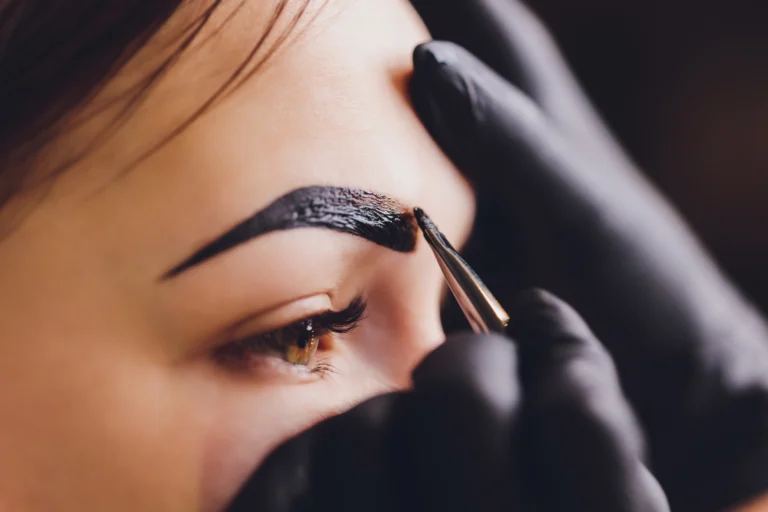
Henna brows work by staining the brow hairs and the top layer of skin underneath, which creates a shaded, filled-in look.
The process involves:
- Mixing the henna powder with water into a paste
- Mapping the brow shape
- Applying the paste over the mapped shape
- Leaving it to develop
- Wiping it away to reveal the colour
Because the stain sits on the skin as well as the hair, henna can add shape where natural hair is thin.
What are the benefits of henna brows?
The main benefits of henna brows are fuller-looking brows, longer-lasting colour than a regular tint, and no needles or downtime.
Henna brow benefits include:
- Fuller-looking brows: the skin stain fills the gaps between hairs, so sparse brows look thicker.
- Longer-lasting colour: henna stays on the brow hairs for up to 6 weeks, longer than a regular tint.
- A more defined shape: henna can be applied just beyond the natural brow line to gently adjust or lift the shape.
- A needle-free treatment: there is no tattooing, healing time or downtime.
- Colour for light or grey hairs: henna darkens blonde, light and grey brow hairs.
- Less daily makeup: brows look filled in without pencils or powders.
- A low-commitment option: henna fades within weeks, so it’s an easy way to try a bolder brow.
So are henna brows worth it? If you want more definition without microblading, they are a quick, semi-permanent option, and your skin type and aftercare decide how long henna brows last for you.
Do henna brows look natural?
Yes. Henna brows look natural when the shade matches your hair colour and the shape is mapped to your face.
The skin stain looks darkest for the first few days, then softens into a more natural, powdery finish.
How long do henna brows last?
Henna brows usually last about 1–2 weeks on the skin and up to 6 weeks on the brow hairs.
Longevity depends on:
- Skin type (oily skin fades faster than dry skin)
- How often you cleanse and remove makeup
- Exfoliants and active skincare near the brows
- Sun exposure and swimming
Are henna brows permanent? No. Henna brows are semi-permanent and fade gradually as your skin renews and your brow hairs grow and shed.
Do henna brows stain the skin?
Yes. Henna brows stain the skin beneath the hairs, which is what creates the filled-in look.
The stain is strongest straight after treatment and softens over the following days.
Who is a good candidate for henna brows?
Henna brows are suitable for people who:
- Have sparse, patchy or over-plucked brows
- Have light, blonde or grey brow hairs
- Want bolder definition
- Aren’t ready for microblading
- Have dry or combination skin, which holds the stain longer
Because every skin journey is unique, a personalised consultation helps determine whether this treatment is the right fit for you.
Who should avoid henna brows?
Henna brows may not be suitable if you:
- Have active eczema, psoriasis or dermatitis in the brow area
- Have cuts, broken skin or a recent peel near the brows
- Have reacted to hair dye or a black henna tattoo before
- Have G6PD deficiency
If you have G6PD deficiency, check with your doctor first, as henna has been linked to red blood cell breakdown in people with the condition, mostly young children.
Are henna brows safe?
Yes. Henna brows are safe when applied by a trained professional, using a brow-specific henna, after a patch test.
Natural pure henna rarely causes allergies, according to DermNet NZ. Reactions are usually caused by PPD (paraphenylenediamine), a dye added to “black henna” and some darker products. That’s why a patch test matters, even with a natural product.
Overdoing henna can dry the skin and brow hairs, so leave enough time between treatments.
Do you need a patch test for henna brows?
Yes. A patch test for henna brows should be done 24–48 hours before your appointment, not on the day.
At a salon, a small dab of the henna mix is applied behind your ear or on your inner arm, either at a short visit or during your consultation. If there’s no reaction after 24–48 hours, your treatment can go ahead.
The wait matters because an allergic reaction can appear anywhere from a few hours to days after contact. Signs include an itchy rash, redness or swelling around the brows or eyelids.
Repeat the patch test if:
- The product changes
- It’s been a while since your last treatment
- Your health changes, for example during pregnancy
A patch test is essential if you’ve reacted to hair dye or had a black henna tattoo.
What are the side effects of henna brows?
The most common side effects of henna brows are mild redness, tingling and dryness, which usually settle within 24 hours.
Temporary side effects may include:
- Mild redness
- Slight tingling or itching
- Dryness on the brow area
- Stain outside the brow line, which fades or wipes off
A true allergic reaction is rare, and dye reactions are usually mild, according to the NHS. If swelling or a rash gets worse, contact your doctor.
Are henna brows safe during pregnancy?
Henna brows are generally considered safe during pregnancy, as only a small amount is absorbed through healthy skin, according to the pregnancy information service MotherToBaby.
However, there’s no research on henna brows in pregnancy specifically, and some brow specialists and henna brands recommend waiting until after pregnancy and breastfeeding. Pregnancy hormones can make your skin more reactive, even to products you’ve used before.
To be safe, check with your doctor or midwife before booking, and do a fresh patch test.
What happens during a henna brow appointment?
A henna brow appointment follows six steps: consultation, preparation, mapping, application, 10–20 minutes of development, and removal.
Here’s what each step involves:
Consultation and shade selection
Your brow goals, natural colour and skin are assessed.
Cleansing and preparation
The brow area is cleaned to remove oil and makeup.
Mapping
Your ideal brow shape is outlined.
Application
The henna paste is applied over the mapped shape.
Development time
The henna is left on for about 10–20 minutes, depending on the intensity you want.
Removal and tidy-up
The henna is wiped away, and stray hairs are tweezed, threaded or waxed.
How long do henna brows take?
A henna brow appointment usually takes under an hour, including shaping.
There is no downtime, so you can go straight back to your day.
Do henna brows hurt?
No. Henna brows are painless.
You may feel slight tingling while the henna develops. Tweezing or threading stray hairs may sting briefly.
What are the aftercare instructions for henna brows?
Henna brow aftercare means keeping your brows dry and untouched for the first 24 hours, then keeping oil-based products and exfoliants away from them.
First 24 hours:
- Keep your brows dry
- Avoid rubbing or touching them
- Skip makeup on the brows
- Avoid swimming, sunbathing, saunas and heat treatments
- Avoid perfumed products near the brows
Ongoing care:
- Use an oil-free makeup remover around the brows
- Avoid scrubs, AHAs and retinol near the brows
- Thread or tweeze stray hairs rather than waxing over the colour
- Protect your brows from strong sun
How do you remove henna from eyebrows?
Henna fades from the skin on its own within days. To speed it up, cleanse gently with an oil-based makeup remover and exfoliate lightly.
Avoid scrubbing hard, as this can irritate the skin. If you’re unhappy with the colour, ask your brow specialist for advice.
How often can you get henna brows?
Most people touch up henna brows every 4–6 weeks, once the colour on the hairs has faded.
Leaving time between treatments lets your skin and brows recover, and helps avoid dryness.
Further Questions About Henna Brows
What’s the difference between henna brows and brow tint?
Henna brows colour both the hair and the skin, while a regular brow tint colours the hairs only.
| Brow tint | Henna brows | |
| What it colours | Brow hairs only | Brow hairs and the skin beneath |
| Finish | Softer, more natural | Bolder, more filled-in |
| How long it lasts | Typically 2–4 weeks | Up to 6 weeks on the hairs, 1–2 weeks on the skin |
| Best for | A subtle change | Sparse brows that need more definition |
Consider eyebrow tinting if you want a subtle change, or henna if your brows are sparse and you want more definition.
What’s the difference between henna brows and hybrid brows?
Henna brows use a plant-based henna stain, while hybrid brows blend henna-style staining with a traditional tint.
| Henna brows | Hybrid brows | |
| Formula | Plant-based henna | Tint combined with henna-style staining |
| Skin stain | Deeper and longer-lasting | Softer |
| Shade options | More limited | More shade flexibility |
| Finish | Often bold | Softer and more customisable |
Hybrid brows suit people who want the filled-in effect of henna with more control over the shade.
What’s the difference between henna brows and microblading?
Henna brows are a semi-permanent stain that lasts weeks, while microblading is a semi-permanent tattoo technique that lasts 1–3 years.
| Henna brows | Microblading | |
| Technique | A semi-permanent stain | A semi-permanent tattoo technique |
| How long it lasts | Weeks | 1–3 years |
| Needles and healing | No needles or healing time | Breaks the skin and needs healing time |
| Result | Enhances your natural brows | Creates hair-like strokes |
Do henna brows turn orange?
Henna brows shouldn’t turn orange when a brow-specific henna is used. Pure henna naturally gives an orange-brown or reddish-brown tint, so brow hennas are blended into brown shades.
A slightly warm tone can show as the colour fades. Choosing the right shade at your appointment helps.
Can henna brows cover grey hairs?
Yes. Henna brows can colour grey or white brow hairs, although they may need a darker shade or a longer development time.
Can you combine henna brows with brow lamination?
Yes. Henna brows are often paired with brow lamination for colour plus a fuller, brushed-up shape.
The timing and order should be guided by your brow specialist.
How much do henna brows cost?
Henna brows typically cost around $45–$70 per session in New Zealand, depending on whether shaping is included.
Where can I get brow enhancements in Christchurch?
Considering brow enhancements in Christchurch? At Lovoir Beauty Salon & Day Spa, our brow specialists can assess your needs and recommend the right treatment for your brows — from eyebrow shaping and threading to tinting, lamination and hybrid brows. Book a consultation to get started.