Our hair removal specialists answer the most frequently asked questions about Laser Hair Removal — including how it works, who it suits, safety, results, and cost.
What is laser hair removal?
Laser hair removal is a non-invasive treatment that uses concentrated light energy to reduce unwanted hair.
The laser targets pigment within the hair follicle. Once absorbed, the light converts to heat, which damages the follicle and reduces its ability to regrow hair. When performed correctly, the surrounding skin remains largely unaffected.
Laser hair removal is designed for long-term hair reduction rather than one-time removal.
How does laser hair removal work?
Laser hair removal works by delivering controlled pulses of light to the treatment area. The process involves:
- Targeting melanin (pigment) in the hair
- Converting light energy into heat
- Damaging the hair follicle at the root
- Interrupting future hair growth cycles
Because hair grows in different phases, multiple sessions are required to effectively target follicles in their active growth stage.
What are the benefits of laser hair removal?
Laser hair removal offers several advantages compared to traditional methods such as shaving or waxing:
- Long-term hair reduction
- Reduced ingrown hairs
- Smoother skin texture
- Minimal downtime
- Quick treatment sessions
- Less discomfort compared to waxing
- Suitable for most body areas, including face and bikini
Over time, treated hair typically grows back finer, lighter, and slower.
Who is a good candidate for laser hair removal?
Laser hair removal works best on individuals with darker hair, as the laser targets pigment within the follicle.
It is commonly suitable for:
- Individuals with dark brown or black hair
- Those experiencing ingrown hairs
- People seeking long-term hair reduction
- Those wanting to reduce frequent shaving or waxing
Because every hair journey is unique, a personalised consultation helps determine whether this treatment is the right fit for you.
Who should avoid laser hair removal?
Laser hair removal may not be suitable for individuals who:
- Have very light blonde, grey, or white hair
- Are pregnant
- Have active skin infections in the treatment area
- Have a history of keloid scarring
- Are using certain medications (such as isotretinoin or photosensitising drugs)
- Have recently tanned skin
Suitability should always be assessed prior to treatment to minimise risks.
What happens during a laser hair removal session?
A laser hair removal session typically follows these steps:
- Consultation and assessment
Your skin tone, hair type, and treatment goals are evaluated to determine the appropriate settings and plan. - Preparation
The treatment area should be shaved 12–24 hours beforehand. The skin is cleansed, and protective eyewear is provided. - Laser treatment
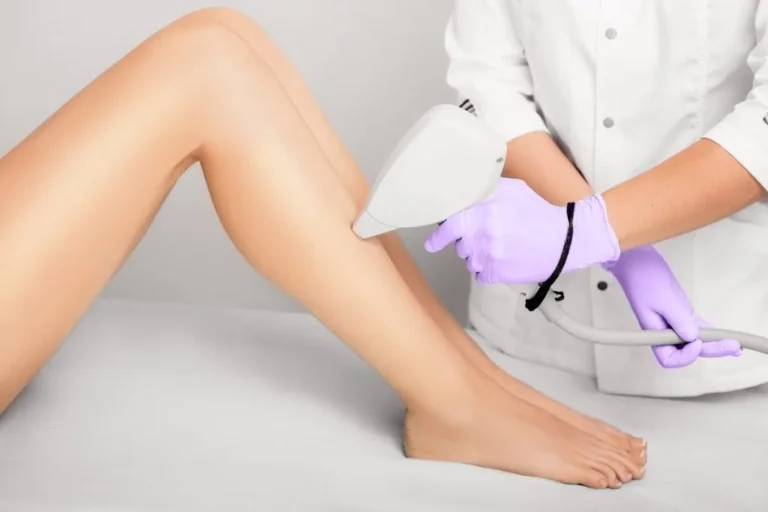
A handheld laser device is passed over the area, delivering controlled pulses of light to target hair follicles. - Post-treatment soothing
Cooling gel or calming products are applied to reduce heat and sensitivity.
How long does a laser hair removal session take?
Most sessions take 15–30 minutes, depending on the size of the treatment area. Larger areas may take longer.
There is typically little to no downtime.
Does laser hair removal hurt?
Laser hair removal is generally well tolerated.
Many people describe the sensation as a quick snapping feeling, similar to a rubber band against the skin. Some areas may feel more sensitive than others, but discomfort is usually brief.
How many sessions of laser hair removal are needed?
Most people require 6–12 sessions, spaced 4–6 weeks apart, depending on:
- Hair growth cycle
- Treatment area
- Hair thickness
- Skin tone
Multiple sessions are necessary because only hairs in the active growth phase respond effectively to treatment.
Your aesthetician will recommend a treatment plan tailored to your natural hair growth and goals. Starting with a personalised consultation helps map out the safest and most effective schedule for you.
How often should you get laser hair removal?
Sessions are typically scheduled every 4–6 weeks to align with natural hair growth cycles.
Your provider will recommend the most appropriate schedule based on your progress.
When will you see results from laser hair removal?
You may notice smoother skin immediately after shaving and treatment, but long-term reduction develops gradually.
- After 1–2 sessions: hair may grow back slower and finer
- After several sessions: visible reduction in hair density
- After a full course: significant long-term hair reduction
Some shedding of treated hairs may occur within 1–3 weeks after each session — this is a normal and expected part of the process.
Are laser hair removal results permanent?
Laser hair removal provides long-term hair reduction, and many people experience lasting results.
However, it does not always guarantee permanent removal. Hormonal changes and natural growth cycles may cause occasional regrowth over time. Maintenance sessions may be required annually or every few years.
Is laser hair removal safe?
Yes — when performed by trained professionals using appropriate technology, laser hair removal is considered safe and low risk.
The treatment works by targeting pigment in the hair follicle without damaging surrounding skin. Safety depends on:
- Proper skin and hair assessment before treatment
- Correct laser settings based on skin tone and hair type
- Avoiding treatment on recently tanned or irritated skin
- Following aftercare instructions carefully
As with any cosmetic treatment, risks increase when performed improperly or without proper assessment. That said, make sure to choose an experienced provider to significantly reduce complications.
What are the common side effects of laser hair removal?
Most side effects are mild, temporary, and part of the normal response to heat energy in the skin.
Common side effects include:
- Redness in the treated area
- Mild swelling around hair follicles
- Temporary sensitivity or warmth
- Slight itching
These effects typically resolve within 24–72 hours.
What are the potential risks of laser hair removal?
Rare risks may include:
- Blistering
- Burns
- Scarring
- Paradoxical hair growth
- Long-lasting pigment changes
On that note, serious complications are uncommon and usually linked to improper technique, incorrect settings, or treatment on unsuitable skin types.
What aftercare practices should you follow after laser hair removal, and how can side effects be minimised?
Proper aftercare helps support healing and improve results.
First 24–48 hours
- Avoid heat, hot showers, exercise, and alcohol
- Avoid sun exposure
- Do not apply deodorant (for underarm treatments)
- Avoid harsh skincare products
After 48 hours
- Resume gentle cleansing
- Continue avoiding waxing or plucking between sessions
- Shaving is allowed if needed
General aftercare tips
- Apply high-SPF sunscreen daily
- Avoid picking or exfoliating the area too soon
- Expect mild shedding of treated hairs over the following weeks
If you’d like a more comprehensive breakdown of how this treatment works — including detailed benefits, candidacy considerations, and treatment planning — you can read our complete guide to Laser Hair Reduction.
Further Questions About Laser Hair Removal
Can you wax before or between laser hair removal sessions?
No. Waxing, plucking, or threading removes the hair root, which the laser needs to target. Shaving is recommended between sessions.
What is the difference between laser hair removal and IPL?
Laser hair removal uses a single concentrated wavelength to target individual follicles more precisely. IPL uses broad-spectrum light, which can treat larger areas but may require more sessions.
Read our detailed IPL vs laser comparison.
How does laser hair removal compare to waxing?
Both laser hair removal and waxing remove hair from the root, but they differ significantly in long-term results and comfort.
Waxing:
- Removes hair immediately
- Requires sessions every 3–4 weeks
- Can be painful
- Does not reduce long-term hair growth
- Suitable for all hair colours
Laser hair removal:
- Gradually reduces hair growth over time
- Requires a series of sessions
- Typically less painful than waxing
- Can lead to long-term hair reduction
- Works best on darker hair
Waxing may be ideal for immediate, short-term results. Laser hair removal is better suited for individuals seeking longer-lasting reduction.
How does laser hair removal compare to electrolysis?
Both laser hair removal and electrolysis aim to reduce unwanted hair long term, but they differ in technology and treatment approach.
Electrolysis:
- Treats one hair follicle at a time
- Uses an electrical current instead of light
- Suitable for all hair colours, including blonde and grey
- Often requires more sessions, especially for larger areas
- Can be more time-intensive
Laser hair removal:
- Targets multiple hair follicles at once
- Uses light energy to damage the follicle
- Typically requires 6–12 sessions
- Faster for treating larger areas
- Works best on darker hair
Electrolysis may be ideal for very light or grey hair. Laser hair removal is often better suited for larger areas and faster overall treatment.
Can laser hair removal be combined with other treatments?
Yes, laser hair removal can often be combined with other aesthetic treatments, but timing matters.
It may be combined with:
- Skin rejuvenation treatments
- Chemical peels (with spacing)
- Body contouring treatments
- Acne treatments (in different areas)
However, laser hair removal should not be performed:
- Immediately before or after aggressive resurfacing treatments
- On recently injected areas
- On skin that is actively irritated or inflamed
Your provider should create a coordinated treatment plan to ensure safety and optimal results.
Is laser hair removal suitable for sensitive skin?
Laser hair removal can be suitable for sensitive skin, but careful assessment is essential.
Sensitive skin does not automatically disqualify someone from treatment. In fact, many people with sensitive skin choose laser hair removal to reduce irritation caused by shaving or waxing.
However:
- Laser settings may need adjustment
- Patch testing may be recommended
- Post-treatment care becomes especially important
If someone experiences frequent eczema flare-ups, active dermatitis, or open skin irritation, treatment may need to be postponed until the skin barrier is stable.
A professional consultation ensures the treatment plan is tailored appropriately.
How much does laser hair removal cost?
The cost of laser hair removal varies depending on:
- The size of the treatment area
- The number of sessions required
- Hair thickness and density
- Technology used
In general, single-session pricing typically ranges between:
- $50–$100 for small areas (upper lip, underarms)
- $150–$300 for medium areas (bikini, half legs)
- $300–$600+ for larger areas (full legs, full back)
Most people require multiple sessions (usually 6–12), and package pricing is often available.
While the upfront investment is higher than waxing, many people find laser hair removal more cost-effective long term due to reduced maintenance and fewer recurring appointments.
A consultation is usually required to determine the most accurate treatment plan and pricing.
View laser hair removal treatment options and pricing.
Where can I get Laser Hair Reduction in Christchurch?
Considering laser hair reduction in Christchurch? At Lovoir Beauty Salon & Day Spa, our hair removal specialists can assess your needs and tailor a plan to your goals. Book a consultation to get started.