Our trained aestheticians answer the most frequently asked questions about Dermaplaning — including how it works, who it suits, safety, results, and cost.
What is dermaplaning?
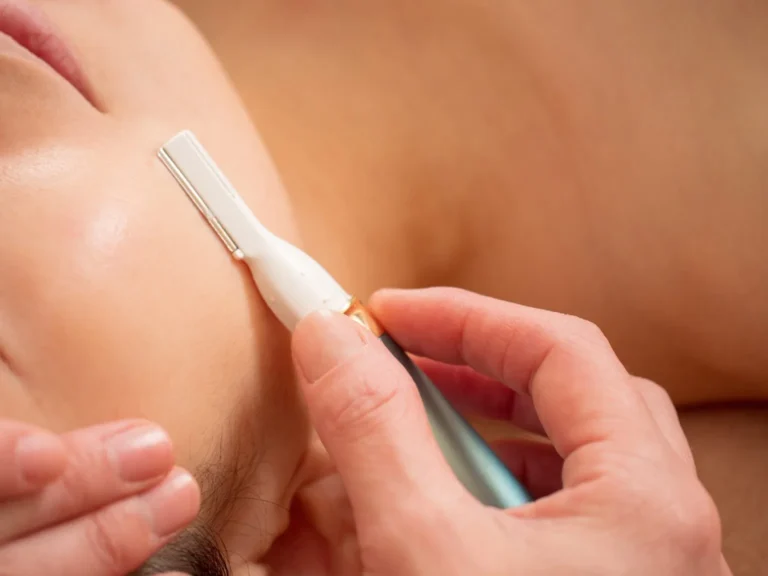
Dermaplaning is a non-invasive exfoliation treatment that uses a sterile, surgical-grade blade to gently remove dead skin cells, surface buildup, and fine vellus hair (“peach fuzz”) from the skin.
By carefully gliding the blade across the epidermis (the outermost layer), dermaplaning instantly reveals skin that looks and feels:
- smoother and softer
- brighter and more even-toned
- more polished for makeup
Think of dermaplaning as a precise, professional “skin reset” — no chemicals, no needles, and typically no downtime when performed correctly by a trained professional. It is also safe for most skin types.
How does dermaplaning work?
Dermaplaning works through controlled manual exfoliation.
A trained aesthetician holds a sterile blade at a 45-degree angle and uses light, upward strokes to gently sweep away surface dead cells and peach fuzz (typically across the face and just below the jawline).
This process:
- removes dead surface cells that can dull the complexion
- lifts debris and excess oil that can cling to peach fuzz
- creates a smoother skin surface
- helps skincare absorb more effectively afterwards
Because angle, pressure, and technique matter (and because sharp tools are involved), dermaplaning is best done by a professional instead of at-home, DIY tools.
What are the benefits of dermaplaning?
Dermaplaning is loved because the results are often immediate. Common benefits include:
- instantly brighter-looking skin
- smoother texture (especially if skin feels rough or dry)
- removal of peach fuzz
- a more even-looking complexion
- smoother foundation and “airbrushed” makeup finish
- better penetration of skincare products after treatment
- improvement in the appearance of mild surface marks (for the right candidate)
Is dermaplaning the same as shaving?
Not really — even though it can look similar.
Shaving is usually done at home using multi-blade razors designed for thicker hair. Dermaplaning uses a single-edge, sterile blade and a specific technique designed for controlled exfoliation.
Key differences:
- dermaplaning focuses on exfoliation + hair removal, not just hair removal
- it’s performed with professional technique (angle, stroke control, hygiene standards)
- it targets the “surface buildup” that can make skin look dull and textured
So while both can remove hair, dermaplaning is a professional skin-resurfacing-style exfoliation treatment, not just “shaving your face.”
Will dermaplaning make hair grow back thicker?
No. This is one of the most common myths.
Dermaplaning removes vellus hair at the surface. It does not change the follicle, and it does not make hair grow back thicker, darker, or faster.
Some people notice hair feels a bit different as it grows back simply because the tip isn’t tapered — but the growth pattern and thickness remain the same.
Is dermaplaning good for acne?
Dermaplaning can help some acne-prone people by removing dead skin buildup and surface debris that contribute to clogged pores.
However, it is not recommended for:
- Active inflamed acne
- Cystic/pustular acne
- Open lesions or irritated breakouts
Why? Because the blade can irritate inflamed skin or nick a pimple, and that can worsen inflammation or spread bacteria.
In those cases, alternative treatments may be more appropriate.
Can dermaplaning help with acne scars?
Dermaplaning can help with the appearance of very superficial acne marks by smoothing the skin’s surface and removing dull, damaged surface cells that exaggerate texture.
It is most helpful for:
- mild post-acne marks and uneven surface texture
- “roughness” left behind after acne resolves
It is less effective for deeper scarring such as:
- boxcar scars
- ice-pick scars
- more structural, deeper texture changes
For those, treatments that stimulate collagen deeper in the skin (like microneedling or other corrective options) are often more effective. Dermaplaning can still be a great supportive step in a broader plan because it refines the surface and helps skin respond well to skincare and complementary treatments.
Does dermaplaning help with fine lines?
Dermaplaning can soften the appearance of very fine, surface-level lines by removing dry, rough outer cells that exaggerate texture.
However, it does not significantly stimulate collagen production like microneedling or deeper resurfacing treatments.
It is best suited for improving the look of early, superficial lines rather than deep static wrinkles.
Can dermaplaning reduce pigmentation?
Dermaplaning may improve mild, surface-level uneven tone by lifting off pigmented surface cells and dull buildup.
It may help with:
- dull uneven tone
- mild sun damage at the surface
- post-inflammatory marks that sit superficially
Deeper pigment issues (like melasma) usually need a more targeted approach and often respond best to professional treatment planning.
Is dermaplaning good for dull skin?
Yes — this is one of its best uses.
By removing the layer of dry, compacted dead skin cells (and the peach fuzz that can trap debris), dermaplaning often leaves skin looking:
- instantly brighter
- smoother and softer
- more even under makeup
It’s often chosen before events because of its immediate refining effect.
Who is a good candidate for dermaplaning?
Dermaplaning is often a great option if you want to improve:
- dullness and rough texture
- Fine lines and surface-level wrinkles
- peach fuzz
- makeup smoothness
- mild pigmentation and uneven skin tone
- surface-level dryness and buildup
It’s ideal for those wanting a quick refresh with little to no downtime.
Because every skin journey is unique, a personalised consultation helps determine whether this treatment is the right fit for you.
Who should avoid dermaplaning?
Dermaplaning is typically not recommended if you have:
- active acne (especially cystic/pustular)
- rosacea (especially during flare-ups) or visible broken capillaries
- eczema or psoriasis flare-ups
- sunburn or significant irritation
- open wounds, infection, or active cold sores
If you’re using prescription acne medication or have recently used isotretinoin/Accutane, you should only proceed with professional clearance — these situations can increase sensitivity and risk.
A professional assessment is important here, because the goal is not just “can you do it?” — it’s “can you do it safely and get a great result?”
What happens during a dermaplaning treatment?
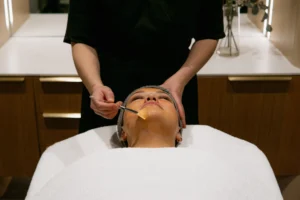
A typical professional dermaplaning session looks like this:
Step 1: Thorough cleanse
Makeup, oil, and debris are removed so the blade can glide cleanly and evenly.
Step 2: Dermaplaning technique
Using a sterile blade held at a precise angle, the skin is treated with controlled strokes across the face (typically down to just below the jawline). Technique and pressure are adjusted to your skin.
Step 3: Calm + hydrate
A soothing, hydrating serum is applied to comfort freshly exfoliated skin.
Step 4: Moisturise + protect
Moisturiser and SPF are applied to protect the new, fresh surface.
The treatment is gentle, controlled, and tailored to your comfort level.
How long does a dermaplaning session take?
Most sessions take approximately 30–45 minutes.
There is no downtime, and you can resume normal activities immediately.
Does dermaplaning hurt?
No — when performed correctly, dermaplaning is generally painless.
Most people describe it as:
- a light brushing or gentle scraping sensation
- slightly ticklish or oddly relaxing
There is no significant pain, and discomfort is minimal.
How many dermaplaning sessions are needed?
Many people see immediate improvement after one session.
For maintenance, it’s commonly done about once a month to align with the skin’s natural renewal cycle.
Your aesthetician will recommend a treatment plan tailored to your skin and goals. Start with a personalised consultation to help map out the safest and most effective schedule for you.
When will you see results from dermaplaning?
Results are visible immediately.
You may notice:
- Smoother texture
- Brighter appearance
- Softer skin
- Improved makeup application
Because dermaplaning works at the surface, improvements are instant rather than gradual.
How long do dermaplaning results last?
Results typically last 3–4 weeks, depending on your skin type and home care routine.
Regular maintenance sessions help sustain the smooth, refined appearance.
Is dermaplaning safe?
Yes — when performed by a trained professional using sterile tools and correct technique.
Despite using a blade, dermaplaning is a superficial treatment. It does not remove living tissue or penetrate deeply into the skin – which is why it’s widely considered low-risk in appropriate candidates.
That said, safety ultimately depends on:
- Proper technique
- Sterile equipment
- Appropriate candidate selection
- Correct aftercare
What are the side effects of dermaplaning?
Most people have little to no side effects. When they happen, they’re usually mild and short-lived, such as:
- slight redness
- temporary sensitivity or tingling
- mild dryness
These typically resolve within 24 hours.
More serious issues (like infection, scarring, or patchy pigmentation) are not normal and are usually linked to poor technique, poor hygiene, DIY attempts, or treating the wrong skin type (for example, dermaplaning over active acne).
Because dermaplaning only affects the outermost layer of the skin, there is no significant downtime. Most people return to normal activities immediately after treatment.
What are the aftercare instructions following dermaplaning?
Dermaplaning is low-downtime, but aftercare matters because your skin is freshly exfoliated and more receptive.
After treatment:
- Be sun savvy: avoid sun exposure and wear SPF 30+ daily
- Avoid excessive heat for a short period (steam rooms, saunas, very heavy workouts)
- Keep skincare simple and hydrating (gentle cleanser + moisturiser)
- Avoid exfoliating acids/actives for several days (or as advised by your provider)
- Avoid makeup for ~24 hours when possible; if needed, choose gentler/mineral options
- Avoid anything that could irritate or “overwork” the skin while it settles
If you’d like a more comprehensive breakdown of how this treatment works — including detailed benefits, candidacy considerations, and treatment planning — you can read our complete guide to Dermaplaning.
Further Questions About Dermaplaning
Can dermaplaning be combined with other treatments?
Yes — and this is one reason it’s so popular.
Because dermaplaning clears away surface buildup, it can help skin absorb products better and can pair nicely with treatments like:
- hydrating facials
- LED therapy
- chemical peels (with appropriate timing and spacing)
A professional should guide the scheduling so skin isn’t overstimulated.
Is dermaplaning safe during pregnancy?
Yes, dermaplaning is generally considered safe because it’s non-invasive and doesn’t involve chemicals.
However, always consult your healthcare provider before undergoing any treatment.
Can you dermaplane at home?
At-home tools exist, but they are less precise and carry higher risk if used incorrectly.
Professional dermaplaning ensures:
- Proper blade angle
- Controlled pressure
- Reduced risk of cuts or irritation
- Better overall results
For safety and optimal outcomes, professional treatment is recommended.
How much does dermaplaning cost?
Pricing varies depending on whether it’s standalone or combined with other treatments.
In general, single-session pricing often falls around $80–$150 per session.
Most people choose monthly maintenance. Package pricing may be available.
A consultation is recommended to determine the most appropriate treatment plan and personalised pricing.
View dermaplaning treatment options and pricing.
Where can I get a Dermaplaning Facial in Christchurch?
Considering dermaplaning in Christchurch? At Lovoir Beauty Salon & Day Spa, our trained aestheticians can assess your needs and tailor a plan to your goals. Book a consultation to get started.