Our skin and hair specialists answer the most frequently asked questions about Scalp Microneedling for Hair Loss — including how it works, who it suits, safety, results, and cost.
What is scalp microneedling?
Scalp microneedling is a minimally invasive treatment that uses ultra-fine, sterile needles to create controlled microchannels in the scalp.
These micro-injuries stimulate the body’s natural healing response, increasing blood flow, collagen production, and cellular activity around hair follicles. While microneedling is widely used for facial skin rejuvenation, it is also an effective approach for supporting scalp health and hair growth.
How does microneedling work for hair loss?
Microneedling helps correct hair loss and support hair growth by improving the overall health of the scalp and hair follicles. It does this by:
- Increasing blood circulation to weakened or dormant follicles
- Enhancing absorption of growth factors, peptides, and exosome serums
- Strengthening collagen support around the follicle root
- Stimulating stem cells within the hair follicle bulge region
- Reducing chronic inflammation that can contribute to thinning
Together, these effects help create a scalp environment that’s more supportive of regrowth.
What are the benefits of scalp microneedling?
Scalp microneedling may help to:
- Improve circulation and nutrient delivery to hair follicles
- Reduce inflammation linked to common hair-loss patterns
- Strengthen follicle anchoring and support healthier growth cycles
- Encourage natural hair regrowth without surgery or medication
- Improve the effectiveness of topical hair-growth treatments
Results vary depending on the cause and stage of hair loss.
Will scalp microneedling help completely bald areas?
Scalp microneedling works best in areas where hair is thinning and follicles are still present, even if they’ve become weak or miniaturised.
If an area of the scalp is smooth and shiny, it usually indicates long-term follicle inactivity. In these cases, microneedling alone may not be effective, and expectations should be discussed carefully before starting treatment.
How does combining scalp microneedling with exosomes support hair growth?
Exosomes are extracellular vesicles derived from stem cells that play a role in cell communication, tissue repair, and inflammation regulation.
When applied during scalp microneedling, exosome serums may help:
- Calm inflammation around hair follicles
- Support faster recovery after treatment
- Reactivate dormant follicles
- Prolong the hair growth phase
- Encourage thicker, stronger hair over time
Microneedling helps enhance absorption by creating direct pathways into the scalp, allowing these signals to reach target areas more effectively.
Who is a good candidate for scalp microneedling?
Scalp microneedling may be suitable for people experiencing:
- Early to moderate hair thinning
- Postpartum hair shedding
- Stress-related hair loss
- A widening part or receding hairline
- Weak or miniaturised follicles
- Mild to moderate androgenetic alopecia
Because every hair journey is unique, a personalised consultation helps determine whether this treatment is the right fit for you.
When might scalp microneedling not be effective?
Microneedling alone may not be suitable for individuals with:
- Advanced or long-term baldness
- Scarring alopecia
- Autoimmune scalp conditions
- Active scalp infections or dermatitis
In these situations, referral to a dermatologist may be recommended.
What happens during a scalp microneedling treatment?
A scalp microneedling treatment typically follows these steps:
- Consultation and assessment
Your therapist assesses your scalp health, hair concerns, and suitability for the treatment. This is also when treatment frequency and the option to include exosome serums are discussed. - Treatment day
On the day of the treatment, make sure to arrive with clean and dry hair. Pre-treatment photos are often taken to help track progress over time. - Preparation
To start the treatment, the scalp is cleansed and sanitised. A topical numbing cream may be applied to improve comfort during the session. - Microneedling of the scalp
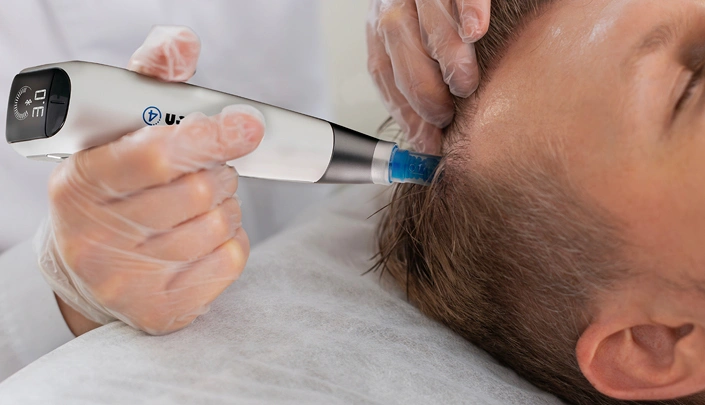
A medical-grade microneedling device is passed over areas of thinning in controlled, precise movements to stimulate circulation and follicle activity. - Exosome upgrade (optional)
If included, exosome serums are applied during the microneedling process. The microchannels created in the scalp help enhance absorption, supporting healing and hair growth at the follicle level. - Soothing and recovery support
The session finishes with calming scalp products to reduce sensitivity and support recovery. Aftercare instructions and product recommendations are then provided.
How long does a scalp microneedling session take?
Most scalp microneedling sessions take around 30–45 minutes, depending on the size of the treatment area and whether additional therapies are included.
Does scalp microneedling hurt?
Scalp microneedling is generally well tolerated.
Some people describe sensations such as pressure, vibration, or mild scratching. A topical numbing cream can be used to improve comfort, and any sensitivity usually settles quickly after the session.
How many scalp microneedling sessions are needed for hair growth?
A typical treatment plan includes:
- 4–6 sessions
- Sessions spaced every 2–4 weeks
- Maintenance sessions every 6–12 months, if needed
Optional enhancements such as exosome serums may support faster recovery and improved response, which can reduce the number of sessions required for some individuals.
Your aesthetician will recommend a treatment plan tailored to your hair-loss pattern, goals, and response to treatment. Starting with a personalised consultation helps map out the safest and most effective schedule for you.
When will you see results from scalp microneedling?
Hair growth occurs gradually and follows natural growth cycles.
Many people notice:
- 4–6 weeks: reduced shedding
- 8–12 weeks: early regrowth and improved scalp health
- 12–24 weeks: increased density and stronger hair texture
Consistency with treatments and aftercare plays an important role in results.
Is scalp microneedling safe?
Yes. When performed by trained professionals using medical-grade devices, scalp microneedling is considered safe and minimally invasive.
As with any procedure, safety depends on proper technique, hygiene standards, and following aftercare advice.
What are the common side effects of scalp microneedling?
Most side effects are mild and temporary, including:
- Redness for 24–48 hours
- Mild tenderness or sensitivity
- Temporary dryness or flaking
- A warm or tight scalp sensation
These effects are part of the normal healing response.
What are the potential risks of scalp microneedling?
Potential risks are uncommon but may include:
- Pinpoint bleeding during treatment
- Mild swelling in sensitive areas
- Temporary increased shedding (“shock loss”)
- Folliculitis or irritation if improper technique is used
Risks are significantly reduced when treatments are performed professionally.
How long do side effects last after scalp microneedling?
Most post-treatment effects resolve within 24–72 hours.
When exosome serums are used alongside microneedling, downtime may be shorter due to reduced inflammation and faster recovery.
What aftercare practices should you follow after scalp microneedling, and how can side effects be minimised?
Most people experience minimal downtime after scalp microneedling, but proper aftercare plays an important role in supporting healing, reducing irritation, and optimising hair growth results.
First 24 hours
- Avoid washing your hair to allow the scalp to settle and, if used, maximise absorption of exosome serums
- Skip styling products
- Avoid sweating, intense workouts, saunas, and steam rooms
24–48 hours
- Use only gentle, recommended scalp and hair-care products
- Avoid direct sun exposure; wear a hat if outdoors
- Mild redness or sensitivity should continue to settle
After 48 hours
- Resume normal hair washing unless advised otherwise
- Continue gentle scalp care and avoid harsh treatments or exfoliation
General aftercare tips
- Use only gentle, non-irritating hair and scalp products
- Avoid harsh chemicals or aggressive scalp treatments for several days
- Protect the scalp from excessive heat and sun exposure
- Follow any personalised guidance provided, especially when exosome serums are included
Consistent aftercare helps support scalp recovery, minimise side effects, and create the best environment for healthy hair growth over time.
If you’d like a more comprehensive breakdown of how this treatment works — including detailed benefits, candidacy considerations, and treatment planning — you can read our complete guide to Exo-Grow Microneedling for Hair Growth.
Further Questions About Scalp Microneedling For Hair Loss
How long do scalp microneedling results last?
Results can last several months, especially when treatments are completed as a series. Maintenance sessions may help sustain scalp health and hair density.
Learn more in our in-depth guide to scalp microneedling results.
Can scalp microneedling be combined with other hair-loss treatments?
Yes. Scalp microneedling is often used alongside other approaches such as topical growth solutions, peptides, supplements, light therapy, or PRP to enhance overall results.
Explore combination hair-growth treatment options.
What needle depth is best for scalp microneedling?
Needle depth varies depending on scalp thickness, sensitivity, and treatment goals. Deeper is not always better, and depth should be selected by a trained professional.
Read more about microneedling treatment parameters.
Is scalp microneedling suitable for sensitive scalps?
It can be, but sensitivity should be assessed beforehand. Treatment depth and frequency may be adjusted to minimise irritation.
Learn more about microneedling for sensitive skin and scalps.
How much does scalp microneedling cost?
The cost of Exo-Grow microneedling varies depending on:
- The size of the treatment area (hairline vs full scalp)
- The severity of hair thinning
- The concentration of regenerative serum used
- The number of sessions required
In general, single-session pricing typically ranges between:
- $350–$600 for partial scalp treatments
- $600–$900+ for full scalp treatments
Because hair grows in cycles, most people require 4–6 sessions spaced several weeks apart. Package options are often recommended for optimal results.
While the upfront investment is higher than topical hair products, many clients find Exo-Grow more effective long term due to its ability to stimulate follicles directly at the source.
A consultation is necessary to assess scalp condition and determine the appropriate treatment plan.
View scalp microneedling treatment options and pricing.
Where can I get Microneedling for Hair Loss in Christchurch?
Considering scalp microneedling for hair loss in Christchurch? At Lovoir Beauty Salon & Day Spa, our hair specialists can assess your needs and tailor a plan to your goals. Book a consultation to get started.