Our skin professionals answer the most frequently asked questions about Microdermabrasion — including how it works, who it suits, safety, results, and cost.
What is microdermabrasion?
Microdermabrasion is a non-invasive, non-chemical skin resurfacing treatment that gently exfoliates the outermost layer of the skin (the epidermis).
Using a specialised diamond-tipped device with controlled suction, it removes dead skin cells while stimulating circulation and cell renewal. This process helps reveal fresher, smoother, healthier-looking skin underneath.
By accelerating natural cell turnover, microdermabrasion can improve:
- Dullness
- Uneven texture
- Mild pigmentation
- Fine lines
- Congestion and blackheads
Think of it as a deep, professional exfoliation — but with added collagen stimulation and circulation benefits.
It is safe for most skin types when performed by a trained professional.
How does microdermabrasion work?
Microdermabrasion works through controlled mechanical exfoliation.
There are two primary methods:
- Diamond-tip microdermabrasion – a diamond-coated wand gently buffs the skin
- Crystal microdermabrasion – fine crystals are sprayed onto the skin and suctioned away
Both methods:
- Remove dead surface cells
- Unclog pores
- Improve circulation
- Stimulate mild collagen production
The suction component simultaneously vacuums away debris, similar to how a vacuum removes dirt — but in a controlled, medical-grade way.
Because specialised equipment and technique are required, professional treatment is strongly recommended over at-home devices.
What are the benefits of microdermabrasion?
With consistent treatment and proper aftercare, microdermabrasion can:
- Brighten dull skin
- Smooth rough texture
- Improve mild fine lines
- Help reduce blackheads and congestion
- Improve product absorption (by up to 50%)
- Minimise the appearance of enlarged pores
- Support mild pigmentation improvement
- Improve superficial acne scarring
- Promote overall skin rejuvenation
Many people also notice that makeup applies more smoothly after treatment due to the refined surface texture.
Is microdermabrasion good for acne and blackheads?
Yes — especially for mild to moderate congestion.
Because blackheads form when oil and dead skin cells clog pores, the exfoliation and suction process helps:
- Remove surface buildup
- Clear debris from pores
- Reduce blackhead formation
- Prevent new congestion
It also improves oil regulation by keeping pores clearer and less prone to blockage.
However, it is not recommended for active cystic acne or inflamed breakouts, as abrasive treatments may worsen inflammation.
Can microdermabrasion help with acne scars?
Yes — particularly for superficial or mild depressed acne scars.
Microdermabrasion triggers the skin’s natural renewal response by stimulating circulation and encouraging collagen production. As new collagen forms and fresh cells replace damaged surface layers, shallow atrophic scars can gradually appear smoother and more even.
It is most effective for:
- Mild rolling scars
- Surface-level textural irregularities
It is less effective for:
- Deep boxcar scars
- Ice-pick scars
- Raised (hypertrophic) scars
For deeper scarring, treatments such as microneedling or IPL may be more corrective. However, microdermabrasion can still play a supportive role in improving overall texture and enhancing results as part of a combination plan.
Does microdermabrasion help with fine lines and wrinkles?
Yes — particularly early, surface-level lines.
As we age, collagen production declines. Microdermabrasion supports:
- Collagen stimulation
- Improved circulation
- Enhanced cell turnover
These effects help soften fine lines and improve overall skin smoothness.
It is most effective for mild textural ageing rather than deep static wrinkles.
Can microdermabrasion reduce pigmentation or dark spots?
Microdermabrasion can help improve mild hyperpigmentation by removing pigmented surface cells and encouraging new, evenly toned skin to emerge.
It may help improve:
- Sun spots
- Age spots
- Post-inflammatory hyperpigmentation
- Uneven skin tone
However, deeper pigment conditions like melasma may require chemical peels, IPL, or combination treatments.
Does microdermabrasion shrink pores?
Microdermabrasion does not permanently change pore size, but it can significantly improve their appearance.
By removing:
- Dead skin buildup
- Oil congestion
- Debris within pores
Pores appear cleaner, tighter, and more refined.
Additionally, improved collagen support around pore walls may subtly enhance firmness over time.
So while microdermabrasion doesn’t “shrink” pores anatomically, it can absolutely help them look less prominent.
Is microdermabrasion good for dull skin?
Absolutely.
By removing the layer of dry, dead cells that cause a tired complexion, microdermabrasion reveals brighter, fresher skin immediately.
This is often why clients notice:
- Instant glow
- Smoother texture
- More even tone
Can microdermabrasion help with stretch marks?
Microdermabrasion may provide mild improvement in texture and discolouration of stretch marks — especially when they are newer and less pronounced.
It works by:
- Encouraging collagen production
- Improving surface texture
- Promoting gradual skin renewal
Because stretch marks involve deeper structural changes in the dermis, results are typically gradual and subtle. Treatments like microneedling often produce more dramatic improvement.
That said, microdermabrasion can be a low-downtime option to improve surface texture and overall skin smoothness.
Who is a good candidate for microdermabrasion?
Microdermabrasion is often suitable for individuals who want to improve:
- Dull skin
- Mild acne and congestion
- Superficial acne scars
- Fine lines
- Mild pigmentation
- Uneven texture
It’s ideal for those wanting gentle resurfacing with minimal downtime.
Because every skin journey is unique, a personalised consultation helps determine whether this treatment is the right fit for you.
Who should avoid microdermabrasion?
Microdermabrasion may not be recommended for individuals with:
- Active acne breakouts or cystic acne
- Rosacea or visible broken capillaries
- Open wounds or infections
- Severe eczema or psoriasis flare-ups
- Very thin or fragile skin
- Recent isotretinoin use (within 6 months)
- A tendency toward keloid scarring
Because the treatment involves controlled abrasion and suction, inflamed or compromised skin may become further irritated.
Those with darker skin tones can safely undergo treatment when performed conservatively. However, overly aggressive exfoliation may increase the risk of post-inflammatory hyperpigmentation. Professional assessment and appropriate settings are essential.
Is microdermabrasion safe?
Yes — when performed by a trained professional.
Despite the word “abrasion,” the treatment is superficial and controlled. It does not remove living tissue or penetrate deeply.
When properly executed:
- It does not thin the skin
- It supports natural renewal
- It improves circulation
- It stimulates mild collagen production
Most safety concerns arise from improper technique, excessive suction, or unsuitable candidates. This is why professional assessment and customised settings are critical.
Is microdermabrasion suitable for sensitive skin?
It can be, but settings may need to be adjusted.
Sensitive skin types may require:
- Lower suction intensity
- Fewer passes
- Longer intervals between treatments
A professional consultation ensures the treatment is customised safely.
Is microdermabrasion safe for darker skin tones?
Microdermabrasion can be safe for darker skin tones when performed gently and conservatively.
However, aggressive treatment may increase the risk of post-inflammatory hyperpigmentation. A patch test and professional assessment are recommended.
How should you prepare for microdermabrasion?
Before treatment:
- Avoid sun exposure
- Stop using exfoliating products for about one week
- Avoid waxing or strong actives
- Inform your provider of medications
Preparation helps minimise sensitivity and reduce risk of side effects.
What happens during a microdermabrasion treatment?
A typical session includes:
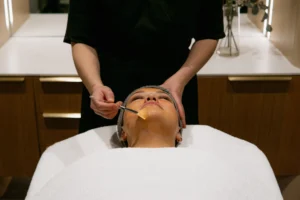
Step 1: Cleansing
The skin is thoroughly cleansed to remove makeup, oil, and surface debris.
Step 2: Controlled exfoliation
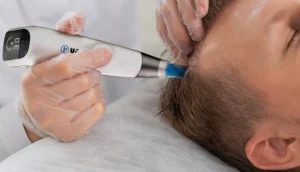
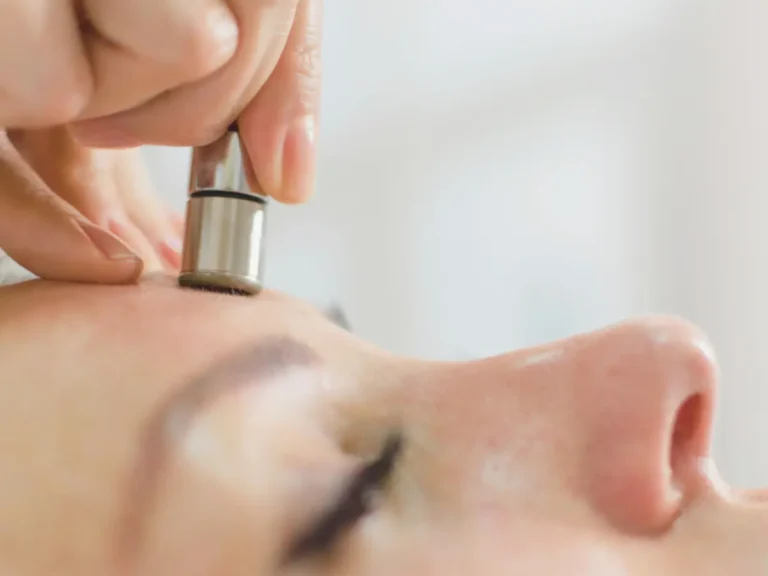
A diamond-tip wand is gently passed over the skin while suction simultaneously removes dead cells and impurities. Areas of congestion or uneven texture may receive additional passes, depending on your skin’s tolerance.
Step 3: Soothing and protection
Calming products are applied, followed by sunscreen to protect the freshly exfoliated skin.
The procedure is methodical and tailored — suction strength, number of passes, and focus areas are adjusted based on your skin condition and sensitivity.
How long does a microdermabrasion session take?
Most sessions take 30–50 minutes.
There is minimal downtime, and you can return to normal activities immediately.
Does microdermabrasion hurt?
No.
Most people describe the sensation as:
- Light scratching
- Mild suction
- Slightly stimulating
There is no significant pain, and discomfort is minimal.
How many microdermabrasion sessions are needed?
For optimal results, many professionals recommend:
- A course of 6 sessions
- Spaced 2–3 weeks apart
Results are cumulative and improve with consistency.
Your aesthetician will recommend a treatment plan tailored to your skin and goals. Start with a personalised consultation to help map out the safest and most effective schedule for you.
When will you see results from microdermabrasion?
You may notice immediate improvements in:
- Smoothness
- Brightness
- Skin softness
However, more corrective changes — such as improvements in pigmentation, fine lines, or mild scarring — develop gradually over multiple sessions.
Because microdermabrasion works with your skin’s natural renewal cycle, results build progressively and look more natural over time. Consistency is key.
How long do microdermabrasion results last?
Results typically last around one month, sometimes longer with proper skincare and sun protection.
Maintenance treatments help sustain improvements.
What are the side effects of microdermabrasion?
Most side effects are mild and temporary, including:
- Slight redness
- Mild sensitivity
- Light swelling
- Temporary dryness
These typically resolve within 24–48 hours.
Because the treatment works only on the superficial layer of the skin, it does not involve deep injury or tissue damage. Most clients return to work, social activities, and normal routines immediately after their session.
Overall, downtime and recovery are minimal and not limiting. The procedure should not interfere with your day-to-day activities.
More serious complications — such as prolonged irritation or pigment changes — are rare and usually linked to improper technique or unsuitable candidates. This is why professional assessment and correct settings are essential.
What are the aftercare instructions following microdermabrasion?
After treatment:
- Avoid exfoliants for one week
- Avoid sun exposure for at least 48 hours
- Avoid public pools temporarily
- Use gentle skincare
- Apply sunscreen daily
Proper aftercare supports healing and maximises results.
If you’d like a more comprehensive breakdown of how this treatment works — including detailed benefits, candidacy considerations, and treatment planning — you can read our complete guide to Microdermabrasion.
Further Questions About Microdermabrasion
Microdermabrasion vs chemical peel: which is better?
It depends on what your skin needs.
Both treatments exfoliate the skin and improve tone and texture — but they work in different ways and at different depths.
Microdermabrasion uses a physical exfoliation method (a diamond tip with suction) to gently remove dead skin cells from the surface. It’s ideal for:
- Dullness
- Mild congestion
- Rough texture
- Early fine lines
- Maintenance treatments
It has minimal downtime and is often described as a “refresh” for the skin.
Chemical peels, on the other hand, use acids to dissolve the bonds between skin cells. Depending on the strength, they can penetrate deeper and may be better suited for:
- Stubborn pigmentation
- Acne and acne marks
- Melasma
- More visible signs of ageing
Peels may involve more peeling and recovery time, especially at medium or deeper strengths.
In short:
- If you’re looking for gentle resurfacing with little to no downtime, microdermabrasion may be the better choice.
- If you need more corrective treatment for deeper pigmentation or acne concerns, a chemical peel may be more effective.
A professional consultation helps determine which approach aligns best with your skin goals.
Microdermabrasion vs microneedling: what’s the difference?
While both treatments improve skin texture, they target different layers of the skin.
Microdermabrasion works on the surface (epidermis). It exfoliates dead skin cells to:
- Brighten dull skin
- Improve mild texture concerns
- Help with blackheads and congestion
- Enhance product absorption
It’s a great option for maintenance and surface-level concerns.
Microneedling, on the other hand, works deeper in the skin (dermis). It creates controlled micro-injuries that stimulate collagen production. This makes it more suitable for:
- Deeper acne scars
- Fine lines and wrinkles
- Stretch marks
- Skin laxity
Microneedling is more corrective but may involve more downtime.
In simple terms:
- Microdermabrasion refreshes the surface.
- Microneedling rebuilds from within.
The best choice depends on how deep your concern goes — and how much correction your skin truly needs.
Can microdermabrasion be combined with other treatments?
Yes — and in many cases, combining treatments can enhance your overall results.
Because microdermabrasion focuses on surface exfoliation, it pairs well with treatments that work at different depths of the skin. For example:
- Chemical peels – may be alternated (not performed on the same day) to provide deeper pigmentation correction.
- IPL skin rejuvenation – can target pigmentation or redness while microdermabrasion helps improve surface texture and glow.
- Facials – Microdermabrasion is often incorporated into advanced facial treatments to enhance product penetration and boost visible results.
When layered correctly, combination treatments can create more comprehensive and longer-lasting improvements than a single treatment alone.
That said, timing matters. Some treatments should not be performed too close together to avoid overstimulation or irritation. A professional will space them appropriately based on your skin condition, goals, and tolerance.
Is microdermabrasion safe during pregnancy?
It is generally considered safe because it is non-invasive and does not use chemicals, but always consult your healthcare provider first.
Can you do microdermabrasion at home?
At-home devices exist but are significantly less powerful and carry higher risk if used improperly.
Professional treatment is recommended for safety and optimal results.
How much does microdermabrasion cost?
The cost of microdermabrasion varies depending on:
- The treatment area
- Number of sessions required
- Whether it is combined with other treatments
In general, single-session pricing typically ranges between:
- $100–$200 per session
Most people benefit from a course of 6 treatments. Package pricing is often available.
A consultation is recommended to determine the most appropriate treatment plan and personalised pricing.
View microdermabrasion treatment options and pricing.
Where can I get Microdermabrasion in Christchurch?
Considering microdermabrasion in Christchurch? At Lovoir Beauty Salon & Day Spa, our skin professionals can assess your needs and tailor a plan to your goals. Book a consultation to get started.