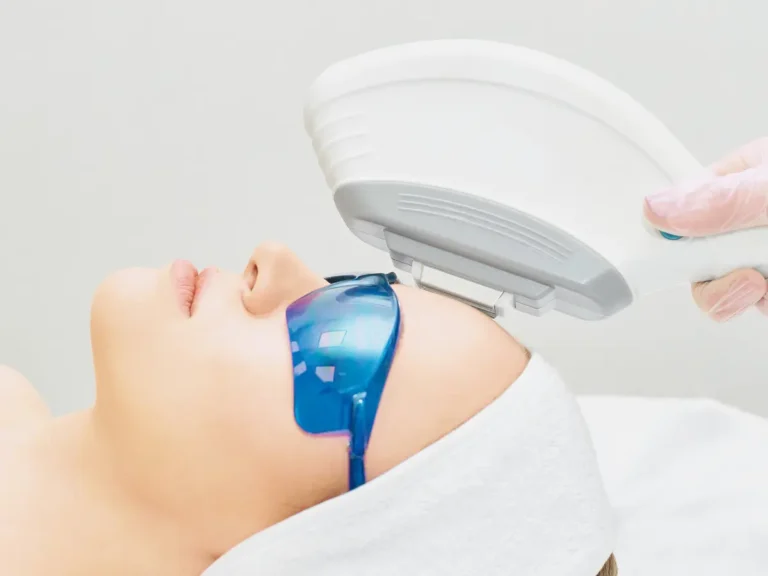
Our aesthetic professionals answer the most frequently asked questions about IPL Facials, also commonly called IPL Skin Rejuvenation or IPL Photofacial — including how it works, who it suits, safety, results, and cost.
What is an IPL Facial?
IPL (Intense Pulsed Light) is a non-invasive treatment that uses broad-spectrum light to improve skin tone, texture, and clarity.
Originally developed to treat vascular concerns such as spider veins, IPL was later found to be effective for a wide range of skin issues, including pigmentation, redness, acne, and signs of ageing. Today, IPL is commonly referred to as an IPL photofacial or photorejuvenation treatment.
Rather than using a single wavelength like lasers, IPL delivers multiple wavelengths of light that penetrate the skin and convert to heat. This heat targets pigment, blood vessels, and damaged skin structures while leaving surrounding skin largely unaffected.
How does IPL work on the skin?
IPL works by delivering controlled pulses of light into the skin, where the energy is absorbed by specific targets such as pigment cells, blood vessels, or acne-causing bacteria.
Once absorbed, the light energy converts to heat, helping to:
- Break down excess pigment
- Reduce visible blood vessels and redness
- Kill acne-causing bacteria
- Stimulate collagen production
Over time, the body naturally clears treated pigment and repairs damaged tissue, leading to clearer, more even-toned skin.
What are the benefits of IPL skin rejuvenation?
IPL can address multiple skin concerns in one treatment, including:
- Uneven skin tone and pigmentation (sun spots, age spots, freckles)
- Facial redness, rosacea, and broken capillaries
- Active acne and acne-causing bacteria
- Acne scarring and uneven texture
- Fine lines and early signs of ageing
- Enlarged pores
- Overall skin brightness and clarity
Results develop gradually and often improve with a series of treatments.
Can IPL help with pigmentation concerns?
Yes. IPL is commonly used to treat pigmentation caused by sun damage, ageing, and certain forms of hyperpigmentation.
Treated pigment may temporarily darken after the session before naturally flaking off over the following days. Over a series of treatments, skin tone typically appears clearer and more even.
IPL may be effective for some types of melasma, but suitability should always be assessed individually.
Can IPL treat acne and acne scars?
IPL can help with both active acne and post-acne marks.
The light energy targets acne-causing bacteria, helping to reduce breakouts, while also supporting healing and collagen production that can improve the appearance of acne scars and uneven texture over time.
Can IPL help with redness and broken capillaries?
Yes. IPL is often used to treat visible redness, broken capillaries, spider veins, and vascular lesions associated with rosacea.
The light energy targets affected blood vessels, which are then gradually reabsorbed by the body, resulting in clearer, more even-looking skin.
Who is a good candidate for IPL skin rejuvenation?
IPL is generally most suitable for individuals with fair to light-brown skin tones who are seeking treatment for pigmentation, redness, acne, or early signs of ageing.
Because every skin journey is unique, a personalised consultation helps determine whether this treatment is the right fit for you.
Who should avoid IPL?
IPL may not be suitable for individuals who:
- Have very dark or recently tanned skin
- Are pregnant
- Are taking certain medications (including retinoids or photosensitising drugs)
- Have active skin infections or open wounds
- Have a history of keloid scarring
- Recently used tanning beds or self-tanning products
Individual assessment is always recommended.
What happens during an IPL skin rejuvenation treatment?
An IPL treatment typically follows these steps:
- Consultation and assessment
Your skin is assessed to determine suitability, target concerns, and the appropriate treatment plan. - Skin preparation
The treatment area is cleansed, and protective eyewear is provided to shield your eyes from the light. - Application of cooling gel
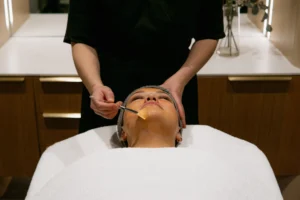
A cooling gel is applied to help conduct light energy and improve comfort. - IPL treatment
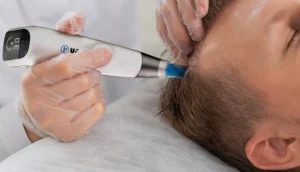
The IPL device is passed over the skin, delivering pulses of light. You may feel warmth or a mild snapping sensation with each pulse. - Post-treatment soothing
The session finishes with calming skincare to reduce heat and sensitivity.
How long does an IPL session take?
Most IPL treatments take 15–30 minutes, depending on the size of the area being treated.
Downtime is minimal, and most people return to normal activities shortly after their session.
How many IPL sessions are needed?
While some improvement may be noticeable after one session, most people achieve the best results with a series of 4–6 treatments, typically spaced 3–4 weeks apart.
Maintenance treatments may be recommended to help sustain results over time.
Your aesthetician will recommend a treatment plan tailored to your skin and goals. Starting with a personalised consultation helps map out the safest and most effective schedule for you.
How soon will you see results from IPL?
Results develop gradually and depend on the concern being treated.
- Redness and acne may improve within weeks
- Pigmentation may darken initially, then flake off within 7–14 days
- Collagen-related improvements continue over several weeks
Does IPL hurt?
IPL is generally well tolerated.
Some people describe the sensation as a brief warm snap, similar to a rubber band against the skin. Cooling gel and post-treatment products help minimise discomfort, and sensations usually subside quickly.
Is IPL safe?
When performed by trained professionals using appropriate settings, IPL is considered safe and non-invasive.
Safety depends on correct skin assessment, proper technique, and adherence to aftercare instructions.
What are the common side effects of IPL?
Most side effects are mild and temporary, including:
- Redness or warmth
- Mild swelling or sensitivity
- Temporary darkening of pigmentation
- Slight bruising when treating capillaries
These effects usually resolve within 24–72 hours, though pigment-related changes may last longer as the skin heals.
Other than that, most people return to normal daily activities immediately after treatment, with diligent sun protection being the most important part of recovery.
What are the IPL healing stages for pigmentation and capillaries?
Healing varies depending on the concern treated, but may include:
- Redness: a few hours up to several days
- Darkened pigment spots: up to 7 days
- Crusting or flaking: up to 10 days
- Mild bruising (capillaries): up to 1–2 weeks
What aftercare practices should you follow after IPL?
Aftercare is essential to protect the skin and support healing.
First 24–48 hours
- Avoid sun exposure, heat, exercise, alcohol, and friction
- Use cool compresses if needed
- Avoid exfoliation and active skincare ingredients
Ongoing care
- Cleanse and moisturise gently
- Wear high-SPF sunscreen daily
- Do not pick at darkened pigment or flaking skin
Good sun protection helps prolong results and reduce complications.
If you’d like a more comprehensive breakdown of how this treatment works — including detailed benefits, candidacy considerations, and treatment planning — you can read our complete guide to IPL Skin Rejuvenation.
Further Questions About IPL Skin Rejuvenation
What is the difference between IPL and laser treatments?
IPL uses broad-spectrum light to treat multiple concerns at once, while lasers use a single wavelength to target specific issues. Downtime and suitability vary depending on the technology used.
Read our detailed IPL vs laser comparison.
Can IPL be combined with other aesthetic treatments?
Yes. IPL is often combined with other treatments depending on skin goals and timing.
Explore combination skin treatment options.
Is IPL suitable for dark skin?
IPL carries a higher risk of pigmentation changes in darker skin tones. Suitability depends on skin type and device capability and should always be assessed professionally.
How much does IPL skin rejuvenation cost?
The cost of IPL skin rejuvenation varies depending on:
- The size of the treatment area
- The specific concern being treated (pigmentation, redness, acne, etc.)
- The number of sessions required
- The type of IPL technology used
In general, single-session pricing typically ranges between:
- $150–$300 for smaller areas (face, neck, hands)
- $300–$500 for full-face treatments
- $400–$700+ for larger areas (full chest or back)
Most people require a course of 4–6 sessions, spaced several weeks apart for optimal results. Package pricing is often available.
While IPL may involve multiple sessions, many clients find it cost-effective compared to long-term use of brightening products that deliver slower results.
A consultation helps determine the number of sessions needed and provides accurate pricing based on your skin condition.
View IPL treatment options and pricing.
Where can I get IPL in Christchurch?
Considering IPL skin rejuvenation in Christchurch? At Lovoir Beauty Salon & Day Spa, our aesthetic professionals can assess your needs and tailor a plan to your goals. Book a consultation to get started.