Our skin therapists answer the most frequently asked questions about Facial Treatments — including the types of facials, their benefits, what to expect, how to prepare, safety, results, and more.
What is a facial?
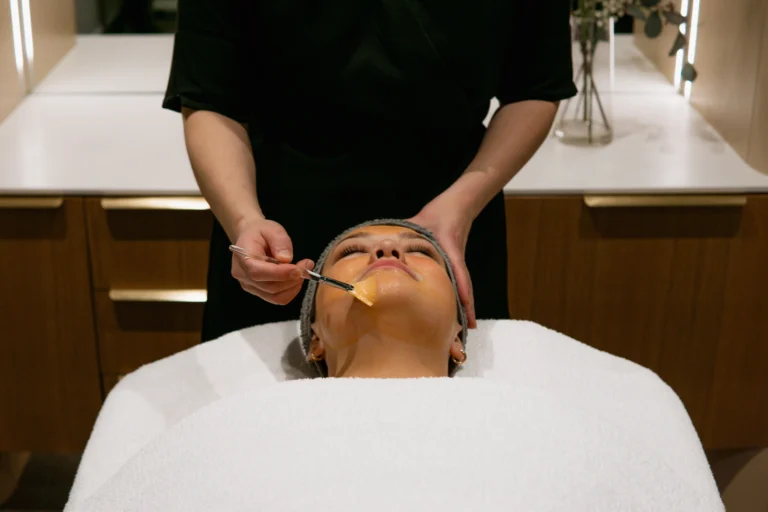
A facial is a professional multi-step skin treatment that cleanses, exfoliates, extracts and hydrates the face in a single appointment. It is performed by a trained skin therapist and tailored to your skin.
A facial — also called a facial treatment or skin treatment — differs from home skincare in three ways: the actives are higher-grade, the exfoliation is deeper, and a professional assesses your skin before anything is applied.
What does a facial do for your skin?
A facial improves how your skin looks and functions by removing dead surface cells so healthy skin is exposed and products absorb properly. The core effects are consistent across facial types:
- Deep cleansing clears oil, debris and product build-up from the pores.
- Exfoliation removes dead surface cells and smooths rough texture.
- Extraction clears congestion, blackheads and blocked pores.
- Hydration restores moisture and strengthens the skin barrier.
- Circulation improves through massage, leaving skin visibly brighter.
- Product penetration increases once the dead-cell layer is gone.
- Professional assessment catches changes you would not spot yourself.
The epidermis renews itself roughly every 28 days, which is why results build across a course rather than arriving all at once. Our expert guide to regular facials covers the benefits and the reasoning in full.
What are the main types of facials?
Facials fall into ten main types, grouped by what they do to the skin:
- Deep cleansing facials clear congestion using steam, enzymes and extractions.
- Exfoliating facials resurface the skin mechanically, such as microdermabrasion.
- Dermaplaning facials remove dead cells and vellus hair with a sterile blade.
- Chemical peels resurface using acids at a controlled depth.
- LED light therapy facials use specific wavelengths to target acne or ageing.
- Lymphatic drainage facials use light massage to reduce puffiness.
- Hydrating facials replenish moisture in dry or dehydrated skin.
- Anti-ageing facials combine actives and infusion to support collagen.
- Cryotherapy facials use cold to calm inflammation and tighten the look of skin.
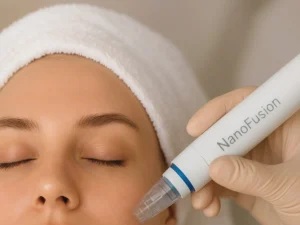
- Nano-infusion facials drive serums deeper without needles.
Each type has its own dedicated FAQ, so this page stays general. The two most commonly asked about are microdermabrasion and chemical peels, which cover mechanical and acid resurfacing respectively.
How often should you get a facial?
You should get a facial every 4 to 6 weeks. That matches the skin’s roughly 28-day renewal cycle, so each treatment meets a fresh layer of skin as it reaches the surface.
Acne-prone and congested skin sometimes benefits from a shorter 3-to-4-week interval at first, while sensitive skin does better spaced further apart. Course-based treatments such as peels run on their own schedules — light peels every 1 to 2 months, medium peels every 4 to 6 months.
How long do facial results last?
A facial’s immediate glow lasts 48 to 72 hours, and its visible results last 5 to 7 days for a standard facial. Deeper corrective treatments hold for 2 to 6 weeks depending on the method used.
That gap between how long results last and the 4-to-6-week booking interval is deliberate, not a flaw. Each facial leaves the skin measurably better than it found it, and the improvement compounds across a course — most concerns need 4 to 6 sessions before the change is lasting rather than temporary. Home care between appointments is what holds the ground gained.
How long does a facial take?
A facial takes 30 to 60 minutes. A deep cleansing enzyme facial runs a full 60 minutes, a chemical peel takes 30 minutes to an hour depending on depth, and express facials are built to fit a lunch break.
What happens during a facial?
A facial follows the same six-step sequence regardless of type:
- A consultation establishes your skin type, concerns and history.
- A double cleanse removes makeup, sunscreen and surface oil.
- Exfoliation lifts dead cells, by enzyme, acid or manual method.
- Extractions clear congestion where needed.
- A mask, serum or infusion targets your specific concern.
- Moisturiser and SPF finish the treatment.
Steam, facial massage and LED are added depending on the treatment and your skin.
Does a facial hurt?
No. A facial is not painful. Most people find it relaxing, and the only step that can feel uncomfortable is extractions, which cause brief pressure or stinging on congested areas. Peels produce a short tingling or warmth that settles within minutes.
Is there downtime after a facial?
Most facials have no downtime — you can return to normal activity immediately. A standard cleansing or hydrating facial may leave mild redness for an hour or two.
Resurfacing treatments are the exception. Light peels can cause sensitivity and mild flaking for a few days, and medium peels can involve redness and peeling for up to two weeks.
Do facials cause breakouts?
Sometimes — and a short breakout after a facial is usually purging rather than a reaction. A facial does not create congestion; it brings existing congestion to the surface faster by speeding up cell turnover.
The distinction matters, and it is easy to tell apart:
- Purging appears where you already had clogged pores, and usually clears within 1 to 2 weeks.
- A reaction appears in areas you do not normally break out, and tends to be red, swollen or painful.
Purging is most common after extractions, exfoliating treatments and peels. If a breakout is still worsening after 2 to 3 weeks, or is painful rather than simply congested, go back to your therapist — that is a reaction to assess, not a process to wait out. Acne-prone skin is more likely to purge, which is why the first few sessions in a course of facials for acne can look worse before they look better.
Are facials safe?
Yes. Facials are safe when performed by a trained skin therapist using professional-grade products, and the main risks come from over-treatment rather than the treatment itself.
Over-exfoliation is the most common problem. The American Academy of Dermatology advises matching exfoliation to your skin type and avoiding it altogether on compromised skin — which is exactly why a professional assesses your skin first rather than applying a fixed protocol.
Who should avoid a facial?
You should postpone or modify a facial if any of the following apply:
- Active cold sores, infections or open wounds on the face.
- Severe sunburn or very recently tanned skin.
- Isotretinoin use, currently or within the past six months.
- Recent injectables, laser or resurfacing treatment.
- Untreated rosacea flares or inflamed eczema.
- A known allergy to an ingredient in the protocol.
None of these rules out facials permanently. A professional skin consultation establishes what is safe for you now and what to revisit later.
Which facial is right for my skin type?
The right facial is chosen by concern rather than by name. Knowing your skin type narrows it quickly:
| Main concern | Facial type most often used |
| Congestion and blackheads | Deep cleansing or enzyme facial with extractions |
| Dull, rough texture | Microdermabrasion, dermaplaning or a light peel |
| Acne and breakouts | LED light therapy, enzyme facial or salicylic peel |
| Fine lines and firmness | Collagen-stimulating or vitamin-infusion facial |
| Pigmentation and uneven tone | Light to medium chemical peel |
| Redness and puffiness | Lymphatic drainage or cryotherapy facial |
| Dehydration and dryness | Hydrating or nano-infusion facial |
| Sensitivity | Gentle hydrating facial, no acids or manual exfoliation |
Two of these are asked about often enough to have their own FAQs: lymphatic drainage facials for puffiness and cryotherapy facials for redness.
The table is a starting point, not a diagnosis — skin type and skin condition are different things, and a structured skin assessment distinguishes them.
Can you get a facial if you have acne?
Yes. Facials are commonly used for acne, and professional extractions clear congestion more safely than squeezing at home. LED light therapy and enzyme or salicylic treatments are the usual choices, while manual exfoliation is avoided on inflamed skin. See our guide to facial treatments for acne for the full picture.
Are facials suitable for men?
Yes. Male skin is typically thicker and oilier, and regular shaving adds ingrown hairs and irritation, so deep cleansing and exfoliating facials suit it well. Our guide to facials for men covers what changes in the protocol.
What age should you start getting facials?
Most people start between the ages of 14 and 16, when hormonal changes begin and acne is often the trigger. There is no minimum age for a gentle cleansing facial.
Teenage facials use a lighter protocol — deep cleansing, gentle exfoliation and extractions, without strong acids or resurfacing. From the twenties onward the reason shifts from treating breakouts to preventing damage, which is when regular maintenance facials start earning their place. Clients under 16 usually need parental consent.
Can you get a facial while pregnant?
Yes, with modifications. Gentle cleansing, hydrating and lymphatic facials are suitable throughout pregnancy. Retinoids, high-strength acids, and most peels are avoided, and some essential oils are excluded. Tell your therapist you are pregnant and how many weeks at booking, and check with your own clinician if your pregnancy is high-risk.
What should you avoid after a facial?
Freshly treated skin has more open pores and a temporarily thinner surface layer, so the first 24 to 48 hours matter most:
- Makeup waits at least 12 hours, or 24 hours after exfoliating or resurfacing treatments.
- Exercise and sweating wait 24 hours, since sweat on open pores can irritate the skin.
- Saunas, steam rooms and hot yoga wait 24 hours — the skin has already been heated during treatment.
- Direct sun is avoided for 48 hours, and daily SPF is non-negotiable.
- Waxing and hair removal on treated areas wait about a week.
- Exfoliants and strong actives such as retinol and acids pause for several days.
Sunscreen is the one exception to all of this — apply it the same day, every day.
How much does a facial cost?
Facial pricing depends on four things rather than a single rate:
- Treatment type — resurfacing and device-based facials cost more than a basic cleanse.
- Duration — a 60-minute facial costs more than an express version.
- Add-ons — dermaplaning, LED or infusion raise the total.
- Course versus single session — packaged pricing lowers the per-session cost.
For a more accurate view of how facials are priced, browse the facial treatment menu for the full range of prices per facial type.
Further Questions About Facials
What is the difference between a facial and a chemical peel?
A facial is the whole treatment; a chemical peel is one possible exfoliation step within it. Peels are classified as light, medium or deep, and are chosen when acid resurfacing is the right tool for the concern.
Do facial extractions damage your skin?
No, when performed correctly. A trained therapist softens the skin first and works with controlled pressure, which is why professional extraction carries less scarring risk than squeezing at home. Our article on facial extractions explains the method.
Do at-home facials work as well as professional ones?
No. At-home facials maintain results between appointments but cannot match professional treatment, because clinical-grade actives, mechanical exfoliation devices and serum-infusion methods such as nanofusion are not available at home. Use home care as maintenance, not replacement.
Can you get a facial before an event?
Yes. Book a gentle hydrating or brightening facial 5 to 7 days before an event, never the day before. That leaves time for any redness to settle and for the skin to look its best. Avoid peels, dermaplaning and first-time treatments in the two weeks beforehand.
Where can I get a Facial in Christchurch?
Considering a facial in Christchurch? At Lovoir Beauty Salon & Day Spa, our skin therapists can assess your skin and tailor a plan to your goals. Book a consultation to get started.