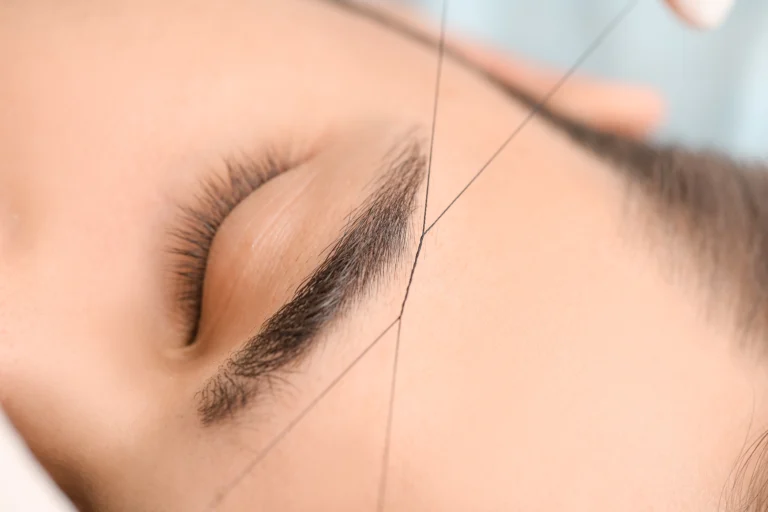
Our threading specialists answer the most frequently asked questions about Threading — including how it works, which areas it suits, pain, safety, aftercare, how long it lasts, and more.
What is threading?
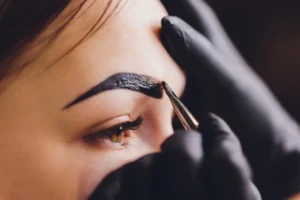
Threading is a hair removal method that uses a twisted cotton thread to lift rows of unwanted hair from the root, most often to shape eyebrows and remove facial hair.
From a professional beauty perspective, eyebrow threading combines the precision of tweezing with the speed of waxing: a threading specialist can remove a single stray hair or a whole row at once. It uses no wax, chemicals or heat, only thread.
Threading is a centuries-old technique from South Asia, the Middle East and Central Asia, and it’s now offered in salons around the world.
Is threading the same as a thread lift? No. A thread lift is a medical procedure that places dissolving threads under the skin to lift it. Hair threading only works on the surface, removing hair.
How does threading work?
Threading works by twisting a doubled cotton thread so that the twist catches hairs and pulls them out of the follicle as it rolls across the skin.
The process involves:
- The thread being doubled and twisted into a coil
- The coil being rolled across the skin, against the direction of hair growth
- The twist closing around a row of hairs
- The hairs being lifted out from the root
Because threading removes hair from the root rather than cutting it at the surface, regrowth takes weeks rather than days.
What are the benefits of threading?
The main benefits of threading are precise shaping, gentle hair removal without chemicals or heat, and results that last for weeks.
Threading benefits include:
- Precise shaping: hairs can be removed one row, or one hair, at a time for clean, defined lines.
- Fine hair removal: threading lifts the soft, fluffy hairs that wax can miss.
- No chemicals, wax or heat: nothing is applied to your skin except the thread.
- Gentle on sensitive skin: threading doesn’t lift the top layer of skin the way wax can.
- Quick appointments: brows and the upper lip take just a few minutes.
- Longer-lasting results: hair is removed from the root, so smoothness lasts weeks, not days.
- Works on any hair colour: fair, grey and red hairs can be threaded as easily as dark ones.
- Hygienic: a fresh thread is used for each client.
- Smoother-feeling skin: removing fine facial hair can leave your skin feeling softer.
One small study found that facial threading lowered skin roughness levels on the forehead and cheeks, with no change in skin pigment.
For brows specifically, here’s a closer look at the eyebrow threading benefits.
What areas can be threaded?
Threading works on the face, including the eyebrows, upper lip, chin, cheeks, sideburns, forehead and the whole lower face.
Popular threading areas include:
- Eyebrows, for shaping and tidying
- Upper lip
- Chin and jawline
- Cheeks and sideburns
- Forehead and between the brows
- Lower face, for a full clean-up
Threading isn’t suited to large areas like the legs or arms, because it works a small section at a time. For larger areas, our hair removal FAQs compare waxing and laser.
Is threading good for peach fuzz? Yes. Threading lifts fine, fluffy facial hair well, which makes it a good option for peach fuzz on the cheeks and upper lip.
Is threading good for sensitive or acne-prone skin?
Yes. Threading is usually a good choice for sensitive and acne-prone skin, because it causes little irritation and doesn’t lift the top layer of skin the way wax can.
There’s no wax, heat or chemicals involved, so threading is a common alternative for people who react to waxing. However, avoid threading directly over active pimples, as it can irritate them.
Can threading cause acne? Some people get small bumps or breakouts after threading, usually from bacteria getting into freshly opened follicles. Keep your hands off the area for at least 12 hours and skip makeup for the rest of the day.
If breakouts are an ongoing concern, make sure to follow skincare tips for acne and breakouts in between appointments.
Does threading hurt?
Threading feels like a quick pinching or tugging sting, similar to tweezing but faster, and most people find it very manageable.
What it feels like by area:
- Eyebrows: usually the mildest
- Upper lip: the most sensitive, and it may make your eyes water
- Chin and lower face: a light, quick sting
To make threading more comfortable:
- Hold your skin taut when your threading specialist asks you to
- Let your specialist know if you’d like a short pause
- Apply a cool compress afterwards
Is threading more painful than waxing? Many people find threading less painful than waxing, although it takes a little longer, so the sensation lasts a bit longer. Pain tolerance varies, and some people prefer waxing.
Is threading safe?
Yes. Threading is safe when a trained specialist uses a fresh thread, clean hands and clean skin.
The main risks come from poor hygiene. Skin infections after threading are rare, and published cases have been linked to salons reusing thread and towels between clients.
So check that your threader:
- Uses a new thread for every client
- Washes their hands and cleans your skin first
- Doesn’t hold the thread in their mouth
Traditionally, threaders held one end of the thread in their mouth. Many salons, ours included, now loop it around the neck instead, which is more hygienic.
What are the side effects of threading?
The most common side effects of threading are redness, mild irritation and some swelling, which usually settle within a few hours.
You can expect some redness, irritation and moderate swelling in the hours after threading, especially on sensitive areas.
Temporary side effects may include:
- Redness
- Mild swelling
- Small red bumps around the follicles
- Watery eyes during brow and lip threading
- Breakouts
Less often, threading can cause ingrown hairs, a skin infection, or darker patches after irritation, especially in darker skin tones. These are usually linked to technique or hygiene.
If you’re generally prone to ingrown hairs, make sure to inform your aesthetician and ask about ingrown hair removal tips.
If redness, swelling or bumps get worse or spread, contact your doctor.
Who should avoid threading?
Threading may not be suitable if you:
- Use retinoids or retinol on the area, or take isotretinoin (Accutane)
- Have sunburn or broken skin on the area
- Have had a recent chemical peel, laser or resurfacing treatment on the area
- Have active pimples, cold sores, warts or a skin infection where you want threading
- Scar easily or tend to get dark marks after skin irritation
Retinoids and isotretinoin can make your skin thinner and more fragile. If you use active skincare like retinoids, or take isotretinoin, tell your threading specialist before your appointment so they can check your skin and advise whether to go ahead or wait.
Because every skin journey is unique, a personalised consultation helps determine whether this treatment is the right fit for you.
Can you get threading while pregnant?
Yes. Threading is generally considered fine during pregnancy, because it uses no chemicals, heat or light, only a cotton thread.
Pregnancy guidance lists temporary hair removal such as waxing and shaving as safe, and advises delaying permanent methods until after pregnancy, according to the UK parenting charity NCT. Threading isn’t named in that guidance, but it’s also a temporary method that removes hair from the root, much like tweezing.
Pregnancy hormones can bring extra facial hair and make skin more sensitive, so threading may sting a little more than usual. Let your threading specialist know you’re pregnant.
To be safe, check with your doctor or midwife before booking.
How should you prepare for threading?
To prepare for threading, let the hair grow out, arrive with clean, makeup-free skin, and tell your threading specialist about any active skincare you use.
Before your appointment:
- Let your hair grow out, so there’s enough to grip, and skip tweezing if you’re reshaping your brows
- Avoid exfoliating, peels and sunburn on the area for a few days
- Ask your specialist whether to pause retinoid or retinol products first
- Mention any medications, skin conditions or pregnancy
On the day:
- Arrive without makeup on the area
- Bring a photo of the brow shape you’d like, if you have one in mind
Some dermatologists advise you to avoid retinoids five to seven days before threading, as these products make skin more sensitive.
What happens during a threading appointment?
A threading appointment follows five steps: a consultation, cleansing, shaping, threading and soothing.
Here’s what each step involves:
- Consultation: you and your threading specialist agree on the shape or the areas to treat.
- Cleansing: your skin is cleaned, and some threaders dust on a little powder to help grip fine hairs.
- Shaping: your brows are brushed into place, and any long hairs are trimmed.
- Threading: the specialist works across each area, and you may be asked to hold your skin taut.
- Soothing: a calming gel or cream is applied to settle any redness.
How long does threading take?
Threading the eyebrows or upper lip takes just a few minutes. A full face takes longer.
What should you do after threading?
After threading, keep your hands off the area and avoid makeup, heat and sun for the first 24 hours to prevent breakouts and irritation.
First 24 hours:
- Don’t touch the area for at least 12 hours
- Skip makeup on the threaded area
- Avoid swimming pools, spas, saunas and hard exercise
- Stay out of the sun
- Avoid fragranced products, exfoliants and retinoids on the area
Ongoing care:
- Use a cool compress or aloe vera gel if you’re still red
- Exfoliate gently a few days later to help prevent ingrown hairs
- Apply sunscreen every day
How long does redness last after threading?
Redness after eyebrow threading usually fades within a few hours.
How long does threading last?
Threading usually lasts 2–6 weeks, and many people find 4–5 weeks typical before the hair grows back.
Dermatologists say threading results last 4 to 5 weeks on average, although everyone’s hair grows at a different rate.
How long it lasts depends on:
- Your natural hair growth cycle
- The area, as upper lip and chin hair often returns sooner
- Hormones
- How much hair was removed
Does threading reduce hair growth?
Repeated threading can make hair grow back finer and sparser over time. However, it doesn’t remove hair permanently, because the follicle isn’t destroyed.
For more permanent results, you may want to consider laser hair removal or electrolysis.
How often should you get threading?
Most people get their eyebrows threaded every 3–4 weeks, once there’s enough regrowth for the thread to grip.
The upper lip and chin often grow back sooner, so many people book those areas a little more often. Between appointments, tidy the odd stray hair with tweezers, but leave the overall shape for your threading specialist.
Further Questions About Threading
What’s the difference between threading and waxing?
Threading lifts rows of hair with a twisted cotton thread for precise lines, while waxing uses warm wax to remove hair from larger areas in one pull.
| Threading | Waxing | |
| How it works | A twisted thread lifts rows of hair | Warm wax pulls hair from the root |
| Precision | Very precise, hair by hair | Less precise on small areas |
| Best areas | Brows, upper lip, chin and face | Face and body |
| Sensitive skin | Gentle, with little irritation | Can redden sensitive skin |
| How long it lasts | 2–6 weeks | 3–6 weeks |
Consider threading for precise brow shaping and sensitive skin, or waxing for larger areas.
For brows, eyebrow threading vs waxing comes down to precision and how your skin reacts.
What’s the difference between threading and plucking?
Threading and plucking both pull hair from the root, but threading removes rows of hair at once, while plucking with tweezers removes one hair at a time.
| Threading | Plucking | |
| Speed | Fast, many hairs at once | Slow, one hair at a time |
| Fine hair | Lifts fine, fluffy hair | Hard to grip very fine hair |
| Done by | A trained threading specialist | Usually yourself, at home |
| Best for | A full brow shape or facial clean-up | The odd stray hair |
Consider threading for a full shape, and tweezers for stray hairs between appointments.
What’s the difference between threading and dermaplaning?
Threading pulls facial hair out at the root, while dermaplaning uses a sterile blade to remove peach fuzz and dead skin cells at the surface.
| Threading | Dermaplaning | |
| What it removes | Hair, from the root | Peach fuzz and dead skin cells |
| How | A twisted cotton thread | A sterile surgical blade |
| How long it lasts | 2–6 weeks | 3–4 weeks |
| Best for | Brows and coarser facial hair | Smoother, brighter skin and peach fuzz |
Threading is hair removal for brows and coarser facial hair, while dermaplaning is more of a beauty treatment for smoother, brighter skin.
Does hair grow back thicker after threading?
No. Threading doesn’t make hair grow back thicker or darker.
Regrowth has a natural tapered tip, unlike shaved hair, which grows back blunt. With regular threading, many people find their hair grows back finer and more slowly.
Can threading remove skin tags?
No. Threading removes hair, not skin tags, so don’t try to thread or tie off a skin tag yourself.
Skin tags are removed by a trained practitioner, usually by freezing, snipping, electrosurgery or a suture tied around its neck. One gentle option is electrolysis for skin tag removal.
Can men get threading?
Yes. Threading suits men who want tidier brows, a cleaner unibrow or neater cheek lines without an over-shaped look. Ask for a natural, straighter shape.
But for hair removal for other areas like the arms, legs, chest or back, there are more suitable hair removal methods for men.
Can you get eyebrow threading and tinting at the same time?
Yes. Eyebrow threading and eyebrow tinting are safe to get together and are often booked in one appointment.
Can you get threading before or after other treatments?
Yes, but timing matters: thread before a spray tan, avoid threading areas being treated with laser, and wait until your skin settles after peels or resurfacing.
- Spray tans: book threading at least 24 hours before your tan, as with waxing.
- Laser hair removal: don’t thread areas you’re having lasered, because the laser needs the hair root to target.
- Facials, peels and resurfacing: avoid threading freshly treated or irritated skin, and ask your specialist how long to wait.
- Other cosmetic or medical treatments: ask your practitioner about timing.
Can you thread your own eyebrows?
You can learn to thread your own eyebrows, but it takes practice, and without training it’s easy to irritate the skin, cause ingrown hairs or end up with uneven brows.
A professional shape is easier to keep up at home: tidy stray hairs with tweezers and leave the shaping to your threading specialist.
How much does threading cost?
Professional threading costs about $32–$75 per session, depending on the area.
Typical prices:
- Eyebrows: about $37
- Upper lip or chin: about $32, or $37 for both
- Lower face: about $50
- Lip, chin and brows: about $75
- Eyebrow threading with a tint: about $47, or $67 with a lash tint as well
View threading options and pricing.
Where can I get threading in Christchurch?
Considering eyebrow threading in Christchurch? At Lovoir Beauty Salon & Day Spa, our threading specialists can shape your brows and remove unwanted facial hair with precise, gentle threading, whether you have sensitive skin or simply want cleaner lines.
Threading is available at our beauty salon in Avonhead and our day spa at The Crossing. Book your threading appointment to get started.